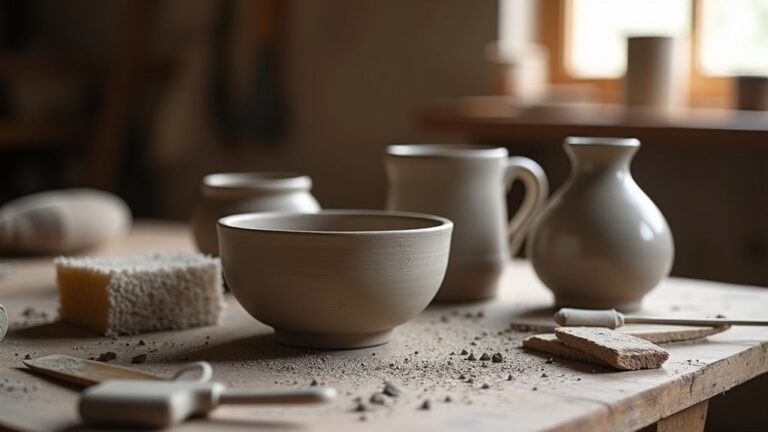
Porcelain starts as a carefully chosen blend of minerals, including kaolin clay, feldspar, and quartz. Skilled artisans shape it by hand using throwing or hand-building techniques, then fire it twice — first around 1,800°F, then up to 2,600°F after glazing. That intense heat transforms fragile clay into something surprisingly tough and beautiful. No machine rushes the process, and that patience makes all the difference. Stick around, and you’ll see exactly why every step matters.
The Raw Ingredients That Make Porcelain Unique
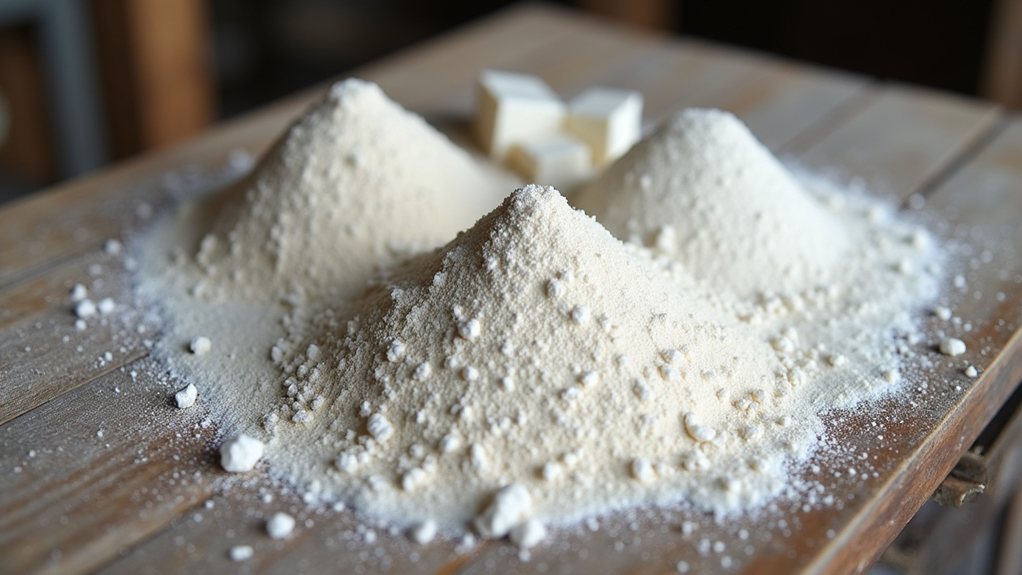
Porcelain’s purity and translucence come from a controlled firing process that locks in its delicate structure, ensuring a lasting, durable finish fine porcelain built from carefully chosen minerals.
How Artisans Shape Porcelain Clay by Hand
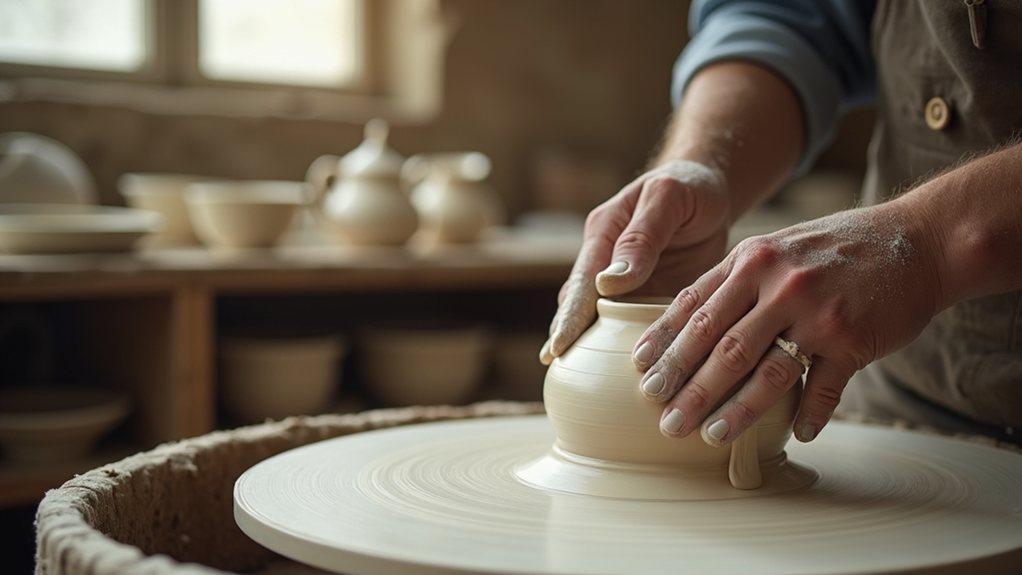
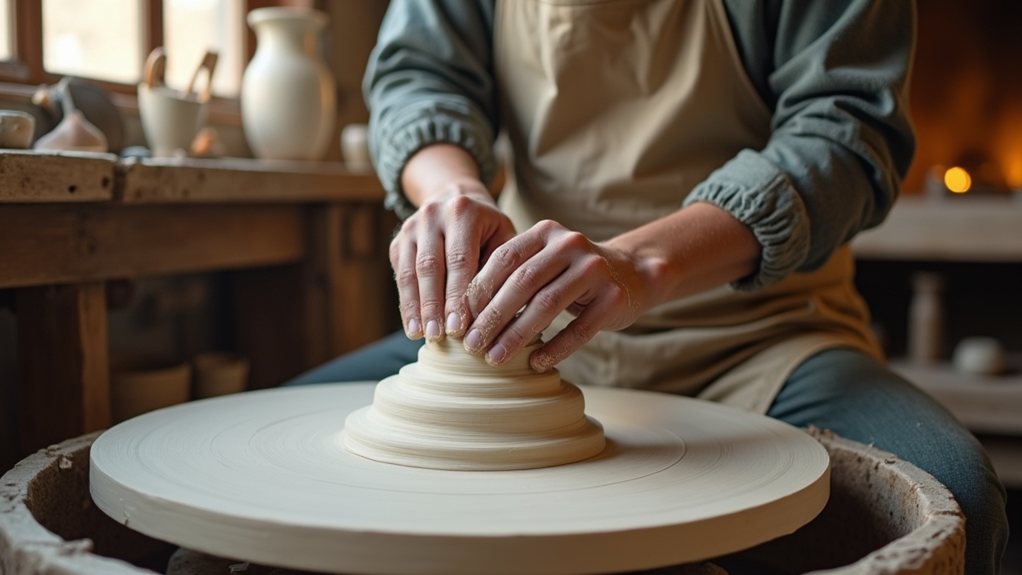
Once the porcelain mixture is ready, the real magic begins — shaping it into something beautiful. Artisans use several techniques to form porcelain clay, and each method requires serious skill and patience. Throwing is one popular approach, where you’d watch a craftsperson center the clay on a spinning wheel and coax it upward with their hands. It looks effortless, but it’s anything but. One wrong move, and your elegant vase becomes abstract art nobody asked for. Hand-building is another technique, where artisans pinch, coil, or slab the clay into shape entirely by hand. It’s slower but incredibly precise. Some pieces are too delicate or complex for a wheel, so skilled hands take over completely. Either way, shaping porcelain demands focus, rhythm, and a genuine feel for the material. The handmade ring holder in blue and white porcelain with gold lustre showcases how careful firing and meticulous finishings preserve a piece’s unique character handcrafted finish and elevates it from utilitarian object to expressive art.
How Firing Transforms Fragile Clay Into Lasting Porcelain
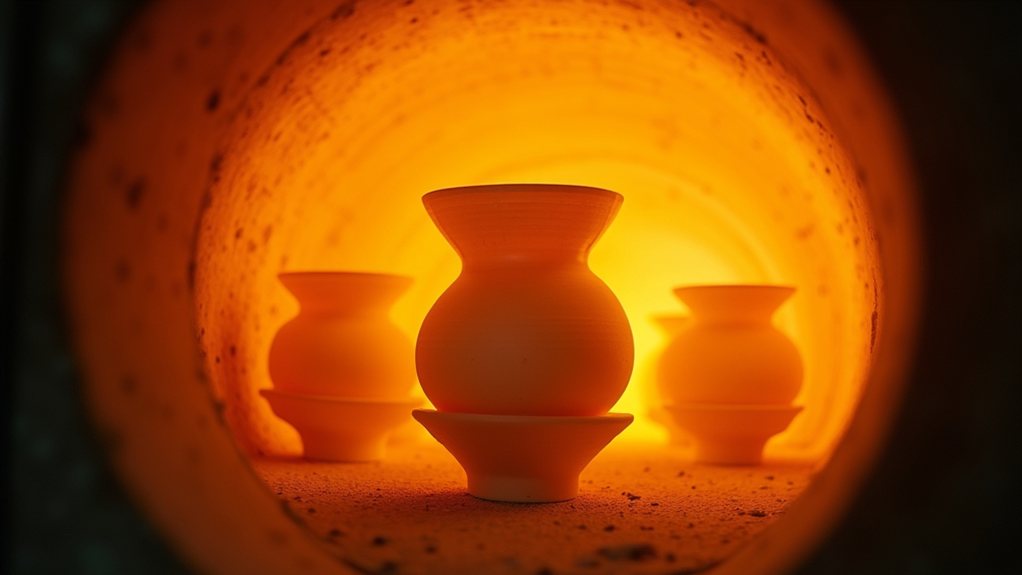
Shaping the clay is only half the battle — now it’s time for fire to do its thing. Firing is where the magic happens, turning soft, fragile clay into something tough and beautiful. Here’s what goes down inside the kiln:
- Bisque firing heats the piece to around 1,800°F, burning off moisture.
- Glazing coats the surface with liquid glass for color and shine.
- Glaze firing reaches up to 2,600°F, fusing everything together.
- Cooling lets the piece slowly return to room temperature without cracking.
You can’t rush this process — thermal shock is real, and one wrong move ruins everything. But when it works, you’ve got porcelain that lasts centuries.
How Glazing Gives Porcelain Its Signature Finish
Firing gets all the glory, but glazing is where porcelain gets its personality. Think of glaze as porcelain’s outfit — it’s the layer that makes a piece look polished, feel silky, and resist water. After the first firing, you apply a liquid glaze mixture to the surface. This coating contains minerals, oxides, and silica, and it looks pretty unremarkable going on. Don’t let that fool you. Once the piece goes back into the kiln, that dull coating melts and transforms into a glassy, luminous finish. Different minerals create different colors and textures, so a copper oxide might give you rich greens, while iron creates warm browns. Glazing isn’t just decorative — it’s functional, sealing the porcelain and making it durable enough for everyday use.
Why Handmade Porcelain Outperforms Mass-Produced Pieces
Why does handmade porcelain feel so different from something you’d grab off a department store shelf? The answer comes down to care, skill, and intention. Mass-produced pieces prioritize speed, but handmade porcelain prioritizes you. Here’s why it genuinely outperforms factory alternatives:
- Unique character – No two pieces are identical, giving you something truly one-of-a-kind.
- Superior craftsmanship – Skilled artisans catch imperfections machines simply ignore.
- Better materials – Handmade pieces often use higher-quality clay and glazes.
- Lasting durability – Careful hand-finishing creates stronger, longer-lasting results.
When an artisan shapes porcelain by hand, they’re investing real attention into every curve and edge. You’re not just buying a mug — you’re owning a small piece of someone’s expertise and dedication.
Final Thoughts
You’ve probably held a porcelain piece without realizing the incredible expedition it took to reach your hands. Funny how something so delicate starts as humble earth and water, yet survives scorching heat to become something beautiful. Now that you know what goes into every handmade piece, you’ll never look at porcelain the same way. It’s not merely a cup or a bowl — it’s someone’s careful, skilled work made permanent.