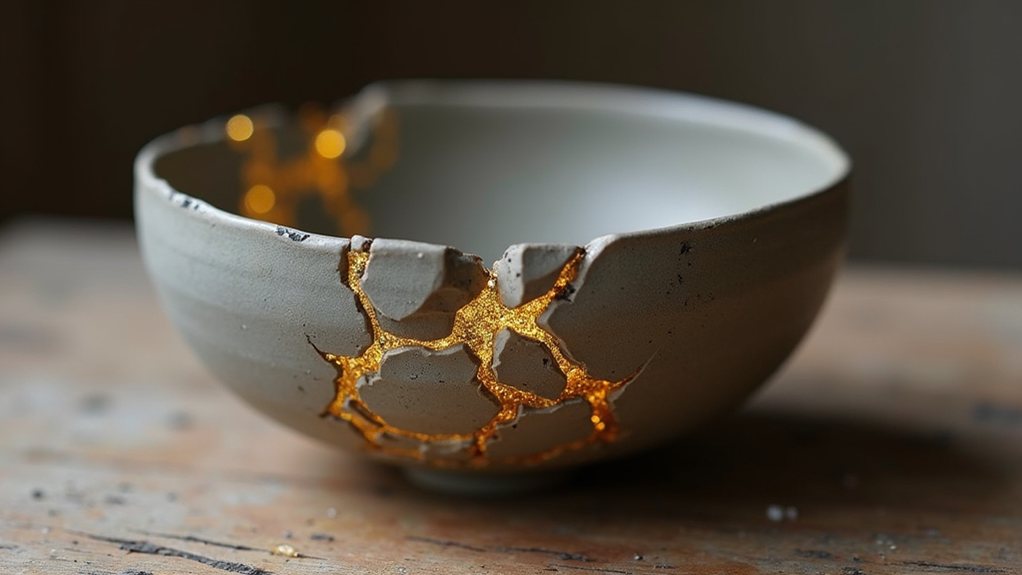
Kintsugi is the Japanese art of repairing broken pottery with gold, silver, or platinum, so the cracks become the most beautiful part of the piece. It started in 15th-century Japan when a craftsman found a creative fix for a shattered tea bowl. Instead of hiding the damage, you highlight it. The philosophy behind it, called wabi-sabi, treats imperfection as something worth celebrating. Stick around, because there’s a lot more to uncover.
A Brief History of Kintsugi
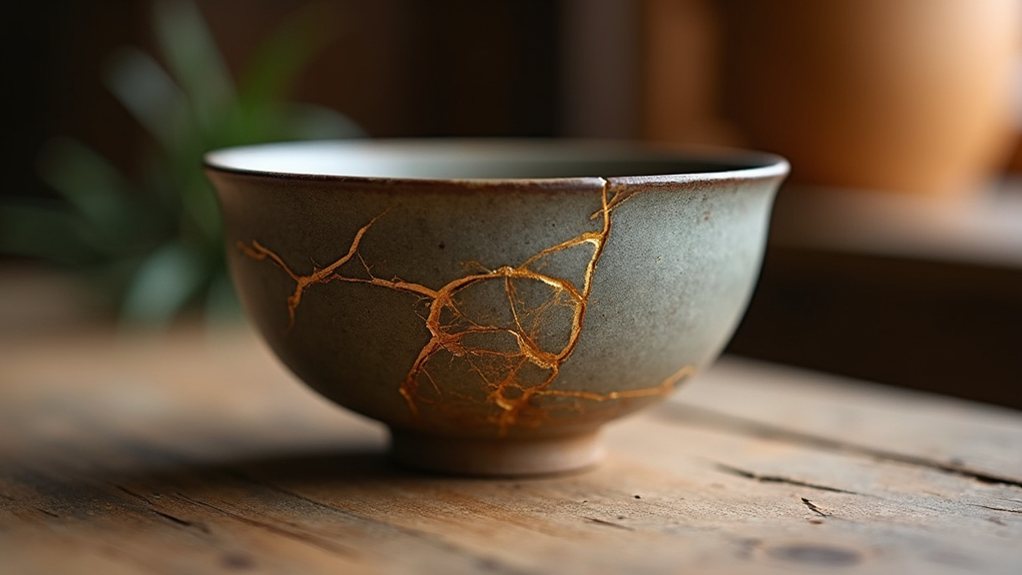
The story of kintsugi goes back to 15th-century Japan, when a shogun named Ashikaga Yoshimasa broke his favorite tea bowl and sent it to China for repairs.
When it came back held together with ugly metal staples, he wasn’t exactly thrilled.
Japanese craftsmen took that as a challenge and developed a more beautiful solution — filling the cracks with lacquer mixed with gold.
The result was stunning.
Instead of hiding the damage, the repairs became the most striking part of the bowl.
This happy accident gave birth to an entirely new art form.
Kintsugi, which translates to “golden joinery,” spread throughout Japan and became deeply tied to the philosophy of wabi-sabi — finding beauty in imperfection and honoring things that have lived a full life.
The practice is distinguished by its handmade variations in color and design that enhance its unique charm rather than flattening it into uniformity.
The Wabi-Sabi Philosophy That Makes Kintsugi Meaningful
Wabi-sabi finds beauty in imperfection, impermanence, and incompleteness. Think of it as the opposite of perfection culture, where cracks, wear, and age aren’t flaws but features. Instead of hiding damage, wabi-sabi celebrates it. Kintsugi puts this philosophy into action by treating breaks as part of an object’s story, not the end of it. When you repair a broken bowl with gold, you’re not pretending it never broke. You’re saying the break happened, it mattered, and the bowl is still worth keeping. That’s a pretty powerful message wrapped inside a piece of pottery. porcelain tealight holder
The Gold, the Lacquer, and the Method
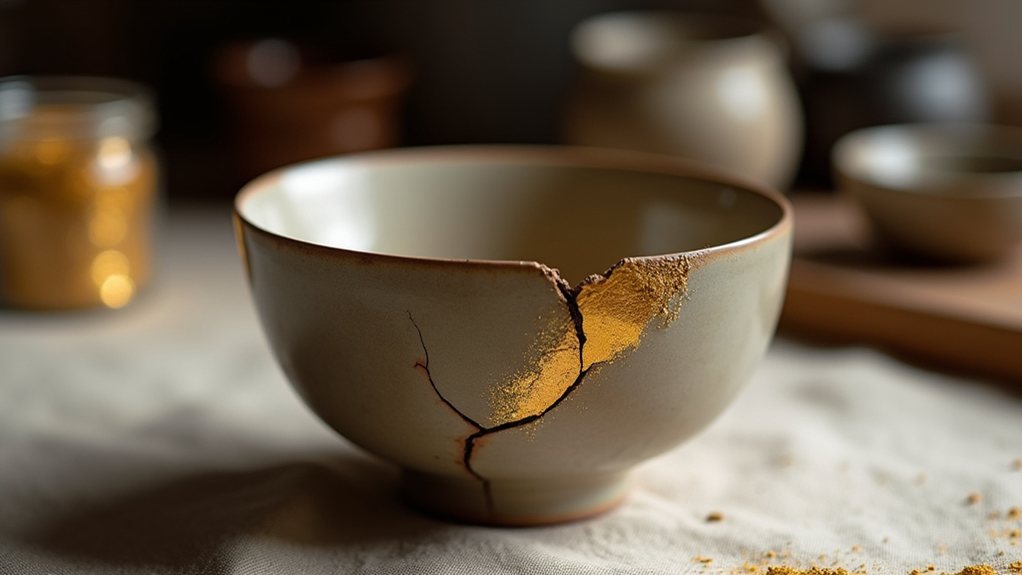
So what actually goes into making kintsugi work? It’s surprisingly straightforward once you break it down:
- Collect every broken piece — even the tiny ones matter.
- Mix urushi lacquer with a bonding agent to create a strong adhesive.
- Press the pieces together carefully, then let everything cure fully.
- Dust real gold, silver, or platinum powder over the lacquered seams.
That’s genuinely it. You’re not hiding the damage — you’re highlighting it with something precious. The lacquer holds everything together structurally, while the metallic powder transforms each crack into a golden line worth admiring. Traditional kintsugi uses real urushi, a tree-derived lacquer that’s incredibly durable. The process takes patience, but the result? A piece that’s honestly more beautiful than before it broke.
How to Try Kintsugi at Home
Trying kintsugi at home is easier than you might think, and you don’t need to be a professional artist to pull it off. Start by gathering your broken pieces — yes, that mug you accidentally dropped counts. You’ll need epoxy glue, gold powder or gold paint, and a fine brush. Mix the epoxy, apply it carefully along the cracks, and press the pieces together. Once it dries, paint over the seams with your gold mixture, following the crack’s natural path. Don’t rush — let each layer dry fully before adding another. The results won’t be museum-quality, but that’s completely okay. Kintsugi isn’t about perfection; it’s about embracing the beauty of imperfection and turning something broken into something worth keeping.
Kintsugi’s Lessons on Resilience, Scars, and Repair
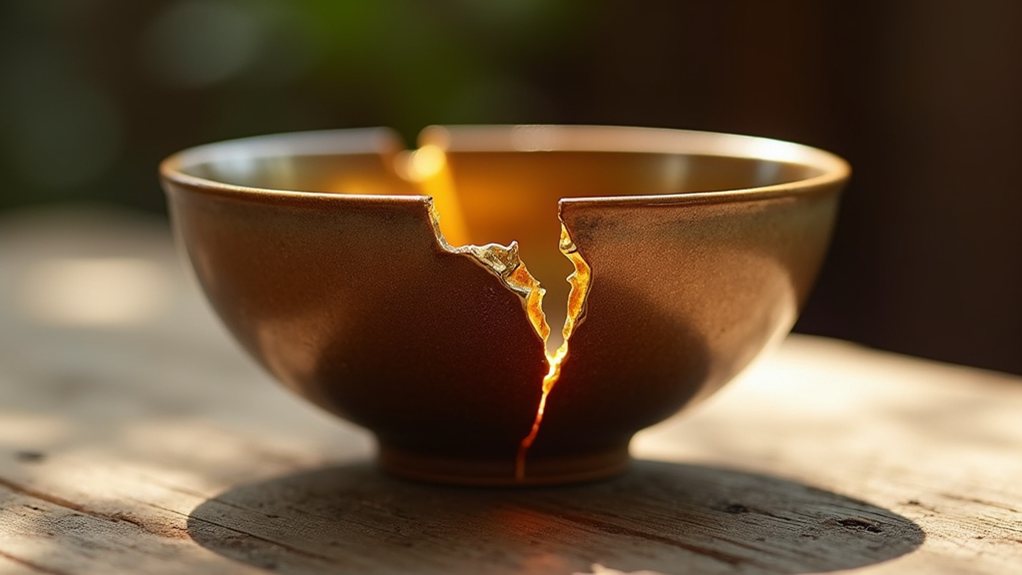
Once you’ve glued your pieces back together and brushed on that gold, something interesting happens — you start seeing your repaired mug differently. Kintsugi teaches some pretty powerful life lessons:
- Scars tell your story — they’re proof you’ve been through something real.
- Broken doesn’t mean worthless — sometimes it means more valuable.
- Repair takes patience — rushing never produces anything beautiful.
- Imperfection is worth celebrating — not hiding.
You don’t need a perfect life any more than you need a perfect bowl. The cracks you carry aren’t flaws to be ashamed of — they’re the places where your gold shows through. Kintsugi reminds you that healing something broken, whether pottery or yourself, creates something worth keeping.
Final Thoughts
You don’t have to be a broken bowl to understand kintsugi’s message. Whether it’s a shattered mug or a rough chapter in your life, you’re not hiding those cracks—you’re filling them with gold. Picture yourself holding that repaired piece, its glittering seams catching the light, each line telling a story worth keeping. Your breaks aren’t failures. They’re just the places where something more beautiful got the chance to grow.