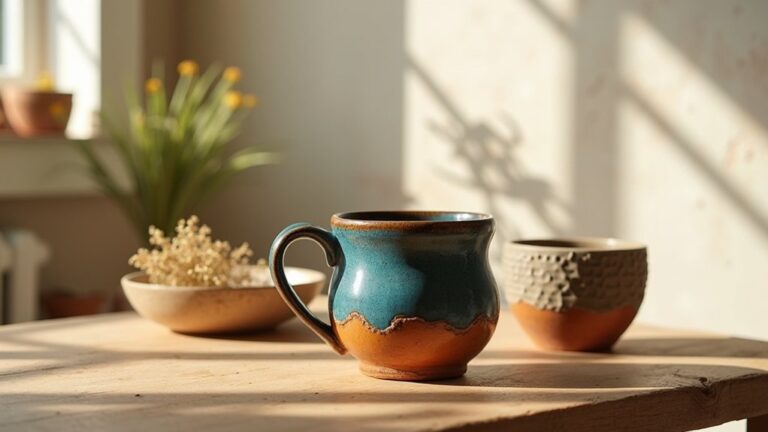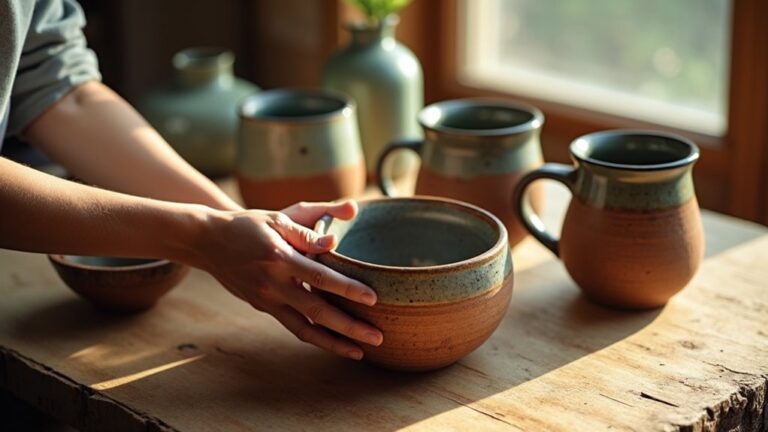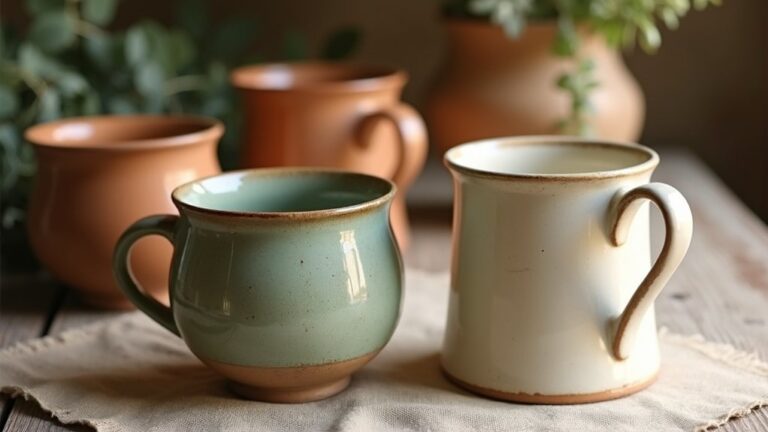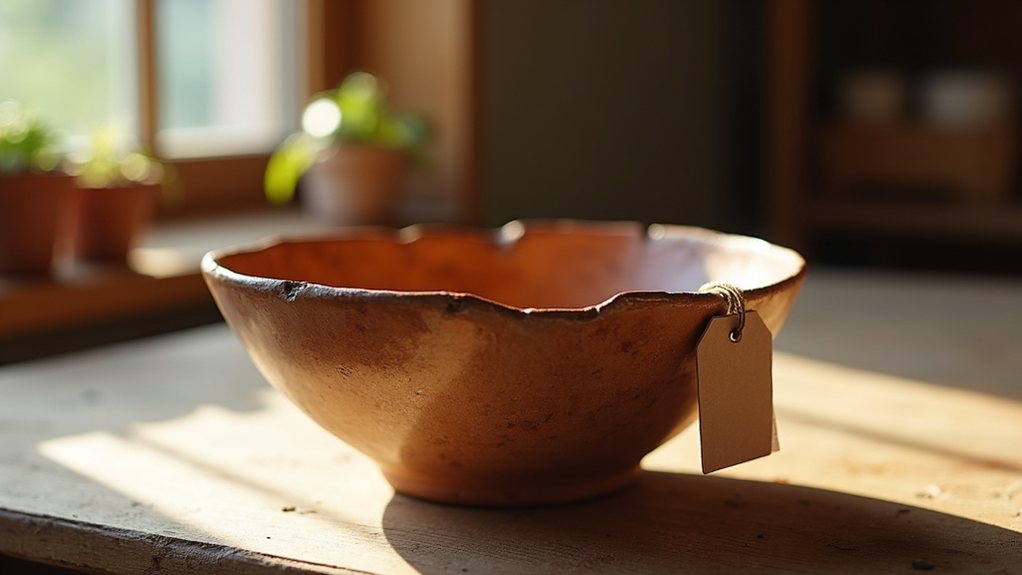
Handmade ceramics are worth the price if meaning matters to you. Each piece takes days to complete, involving skilled shaping, glazing, and multiple kiln firings that can cost up to $100 each. You’re not merely buying a bowl — you’re buying someone’s years of training and creative intention. Mass-produced alternatives are cheaper and practical, but they can’t offer that. Stick around, and you’ll discover exactly what makes that price tag make sense.
The Real Reasons Handmade Ceramics Cost More
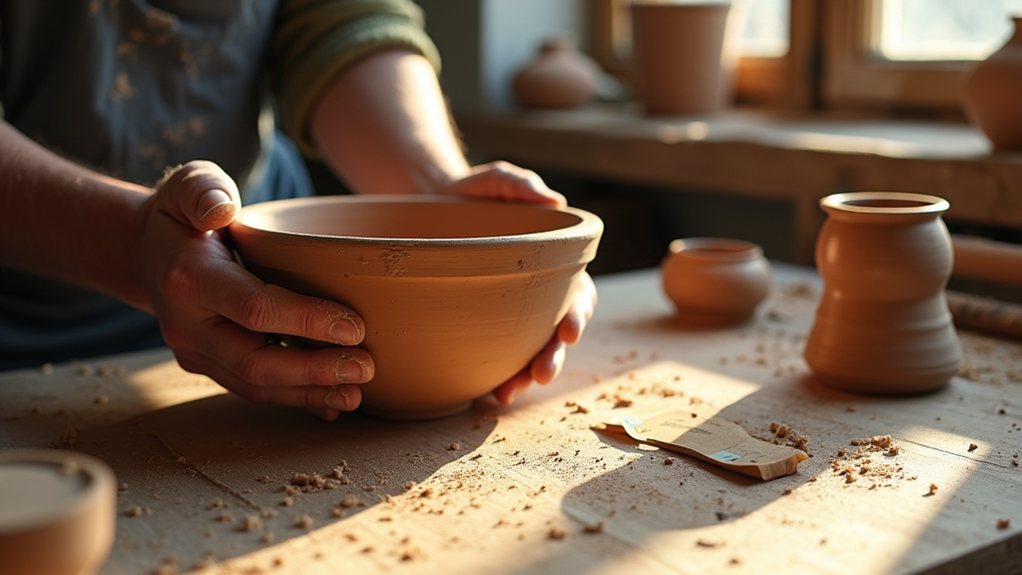
When you pick up a handmade porcelain ring holder, you’re holding a piece that embodies skilled craftsmanship and careful finishing that lasts beyond a single season, a testament to the two firing processes that strengthen the piece.
The Hours of Skilled Labor Hidden in Every Piece
So now that you know why the price tag exists, let’s talk about what’s actually eating up most of it: labor. Every handmade ceramic piece takes serious time and skill to create. They center the clay, shape it carefully, let it dry, trim it, apply glaze, and fire it twice. That’s hours of focused work, sometimes spread across several days. The process relies on traditional techniques that have been refined over generations, often resulting in unique variations that add character to each piece. labor-intensive
Materials, Kilns, and Studio Costs That Drive the Price
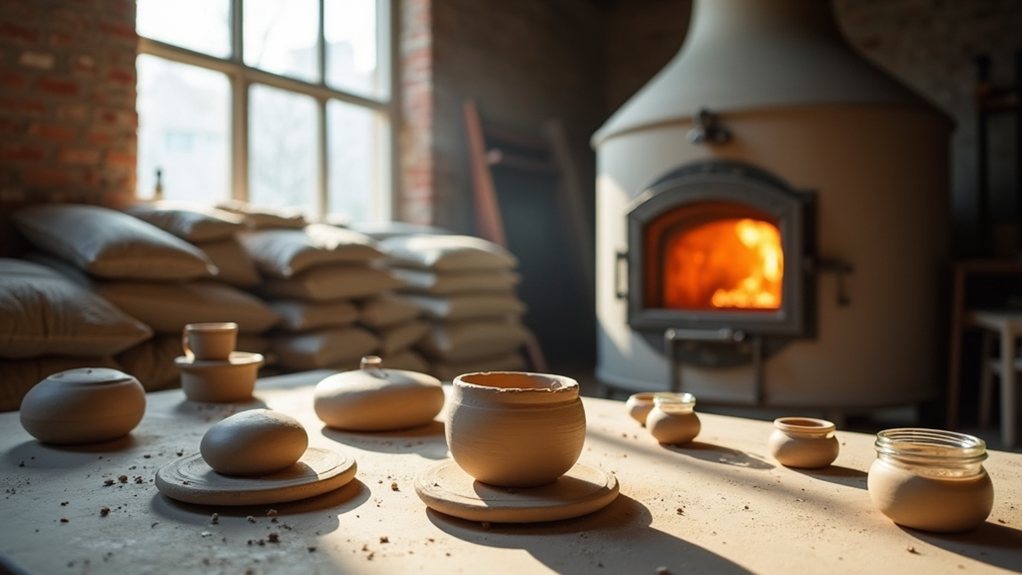
Beyond the hours of work, you’re also paying for a surprising amount of raw materials and operating costs that most people never think about. Quality clay and glazes aren’t cheap, and firing a kiln can eat up a serious amount of electricity or gas with every single load.
Add in studio rent, equipment maintenance, and tool costs, and you start to see why that handmade mug carries a price tag that makes your eyebrows jump.
Clay and Glaze Costs
Most people assume clay is cheap — after all, it’s basically dirt, right? Well, not quite. The clay potters use is specially processed, mixed, and tested for consistency. A 25-pound bag runs anywhere from $20 to $50, and a single piece can eat through several pounds easily.
Then there’s glaze. Those beautiful colors you love don’t come from magic — they come from metal oxides, minerals, and commercial glaze bases that add up fast. A small jar of quality glaze can cost $15 to $30, and potters often layer multiple glazes on one piece.
You’re not just paying for dirt and color. You’re paying for carefully sourced materials that directly affect how your finished piece looks, feels, and lasts for years.
Kiln Energy Expenses
Then there’s the kiln — and this is where things get really expensive. Firing ceramics isn’t cheap, and potters carry those costs every single time they create something for you.
Here’s what drives kiln energy expenses up:
- Electric kilns can cost $50–$100 per firing cycle, depending on your local electricity rates
- Gas kilns burn through fuel quickly, adding up to hundreds of dollars monthly
- Multiple firings are often required, since most pieces need bisque and glaze firings separately
- Kiln maintenance isn’t free either — elements burn out and need replacing regularly
Studio Overhead Fees
So where does all that money actually go once a potter walks through the studio door?
Studio overhead fees quietly eat into every piece you buy.
Rent for a dedicated workspace isn’t cheap, especially in cities where square footage costs a fortune.
Potters also pay for water, ventilation systems, insurance, and equipment maintenance.
Those costs stack up fast, even before a single lump of clay gets touched.
You’re not just buying a mug — you’re helping cover the monthly bill that keeps that creative space alive.
Think of it like supporting a small business, because that’s exactly what it is.
Every overhead expense gets quietly baked into the final price, making each handmade piece a surprisingly complex financial equation wrapped in beautiful, functional art.
The Craftsmanship and Training Behind Each Handmade Ceramic
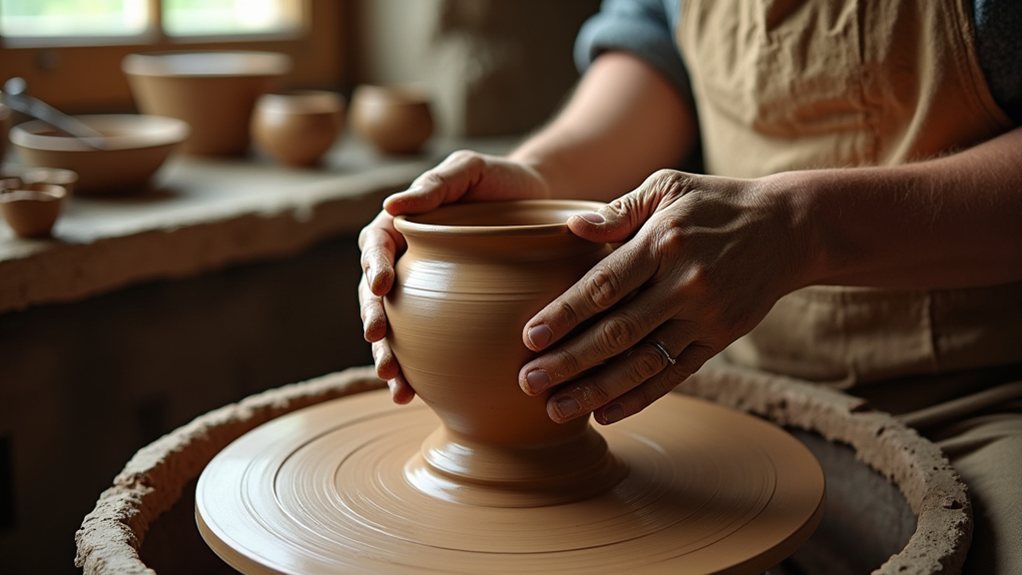
When you hold a handmade ceramic mug, you’re holding years of someone’s hard work and dedication.
Most potters spend thousands of hours practicing before they can consistently throw a centered, even piece on the wheel — and that’s just the basics.
Mastering traditional techniques like hand-building, glazing, and kiln firing can take a decade or more to truly refine.
Years of Skill Development
Most potters spend years — sometimes decades — mastering their craft before they ever sell a single piece. It’s not like picking up a paintbrush and calling yourself an artist after one afternoon. Pottery demands serious time, patience, and a whole lot of failed bowls. Here’s what that skill-building journey typically looks like:
- Learning basic hand-building and wheel-throwing techniques
- Understanding clay bodies, glazes, and firing temperatures
- Developing muscle memory for consistent shaping and trimming
- Studying under experienced mentors or attending formal programs
You’re not just paying for a mug — you’re paying for thousands of hours someone invested to make that mug beautifully. That context changes how you see the price tag, doesn’t it?
Mastering Traditional Pottery Techniques
Beyond just throwing clay on a wheel, traditional pottery techniques take years of dedicated practice to truly master. You’re not simply shaping clay — you’re learning how to control pressure, moisture, and timing all at once. Techniques like hand-building, coiling, and slab construction each demand their own unique set of skills. Glazing alone could keep you busy for years, since every firing produces different results. Honestly, it’s never as predictable as it looks.
Potters study ancient methods passed down through generations, carefully preserving cultural traditions that machines simply can’t replicate. When you hold a handmade ceramic piece, you’re touching the result of someone’s deep technical knowledge. That level of mastery doesn’t come quickly, and it certainly doesn’t come cheaply — which directly explains the price tag.
How Handmade Ceramics Stack Up Against Mass-Produced Alternatives
So how do handmade ceramics actually compare to the mass-produced stuff you’ll find at big-box stores? Honestly, it’s not even a fair fight. Mass-produced pieces are identical, predictable, and frankly a little boring. Handmade ceramics bring something different to your table — literally.
Here’s what sets them apart:
- Uniqueness: No two handmade pieces look exactly alike, giving you something truly one-of-a-kind
- Durability: Quality handmade ceramics often outlast their factory-made counterparts
- Character: Small imperfections actually add charm, not flaws
- Connection: You’re holding something a real person crafted with skill and intention
Mass-produced alternatives win on price and convenience, sure. But if you want pieces that feel meaningful, handmade ceramics deliver something a factory simply can’t replicate.
Do Handmade Ceramics Actually Last Longer?
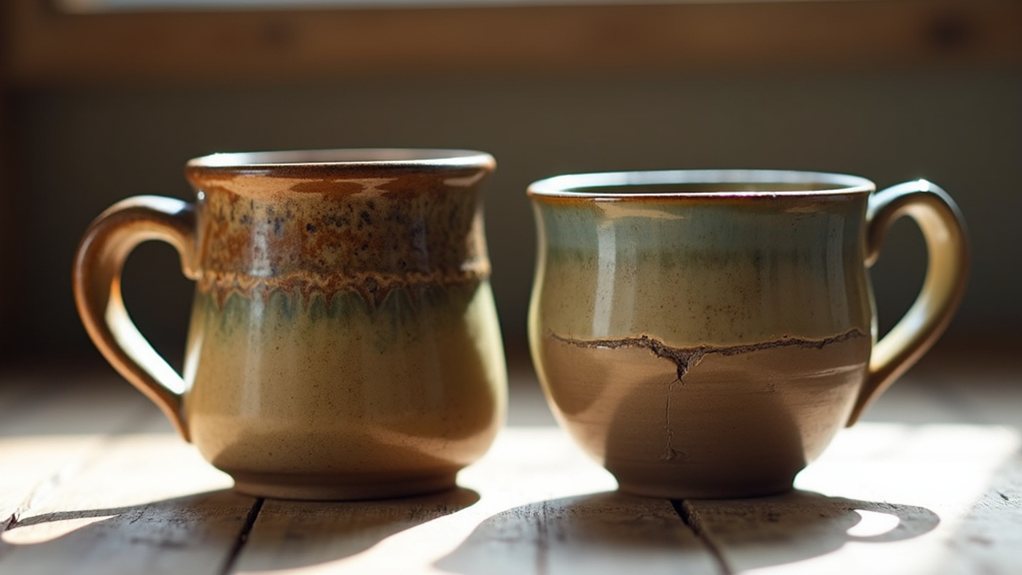
Here’s the thing — the claim that handmade ceramics automatically last longer isn’t quite true. Durability depends more on how you care for them than how they’re made. A mass-produced mug handled gently can outlast a handmade bowl that’s constantly dropped or microwaved on high heat.
That said, handmade ceramics often use thicker walls and denser clay, which can handle daily wear reasonably well. But here’s the catch — inconsistent firing temperatures during handmade production can actually create weak spots you won’t notice until something chips or cracks unexpectedly.
What You’re Really Paying For: Artistry, Provenance, and Story
Durability aside, the real question is what you’re actually handing over your money for when you buy handmade ceramics. Spoiler: it’s not just a mug. You’re paying for someone’s years of skill, their creative choices, and the unique story behind each piece. No two handmade ceramics are identical, which makes yours genuinely one-of-a-kind.
Here’s what’s baked into that price tag:
- Artistry: Hours of skilled handiwork that a machine simply can’t replicate
- Provenance: Knowing exactly who made your piece and where
- Story: A narrative connecting you to the maker’s process and intention
- Uniqueness: Imperfections that make your piece irreplaceable
That emotional connection has real value. Whether it justifies the cost is honestly up to you.
When Handmade Ceramics Are Worth It : And When They Aren’t

Let’s be honest — handmade ceramics aren’t the right choice for every situation, and that’s completely okay. If you’re stocking a busy restaurant kitchen or need twelve matching plates fast, mass-produced ceramics make total sense. Nobody’s judging you for that.
But when you’re buying a gift that actually means something, decorating your home with pieces that reflect your personality, or supporting an artist whose work genuinely moves you, handmade ceramics deliver something factories simply can’t. You’re not just buying a bowl — you’re buying someone’s time, skill, and creative energy.
The honest truth? Handmade ceramics are worth it when the experience and meaning matter as much as the object itself. When you just need something functional and affordable, they probably aren’t. Both answers are perfectly valid.
Final Thoughts
So, are handmade ceramics worth it? That depends on what you value. If you’re chasing something meaningful, research shows that 73% of handmade pottery buyers report feeling a stronger emotional connection to their purchases than with mass-produced items. You’re not simply buying a mug — you’re buying someone’s craft, time, and story. If that resonates with you, the price starts making a lot more sense.