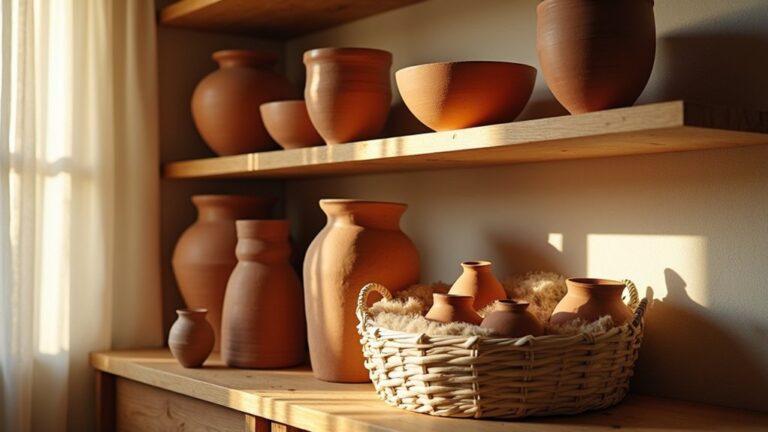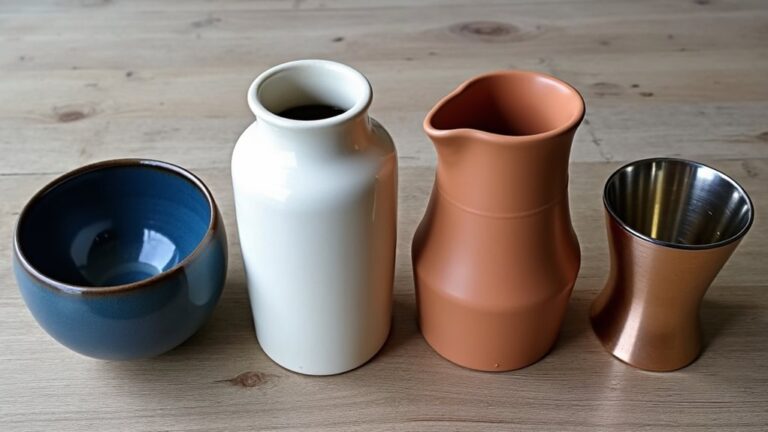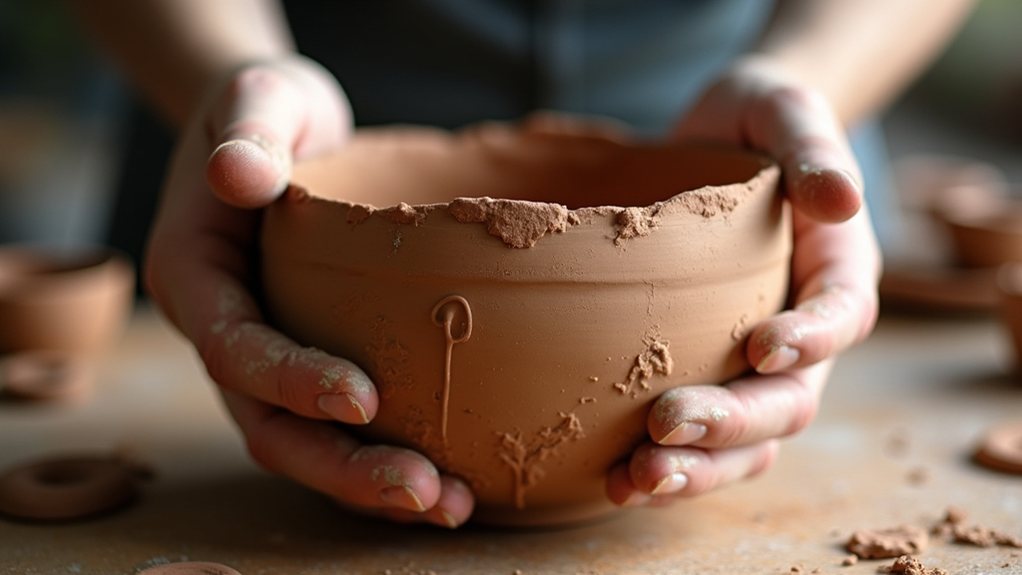
Spotting genuine handmade pottery means trusting your eyes and fingertips. Look for slight unevenness in the walls, a rim that’s not perfectly round, and glaze that pools naturally toward the base. Run your fingers across the surface — real handmade pieces feel alive with subtle ridges and organic texture. Check for a potter’s mark or signature, and remember that tiny imperfections aren’t flaws; they’re proof someone’s hands shaped that piece. There’s much more to uncover ahead.
What Does Genuine Handmade Pottery Actually Look Like?
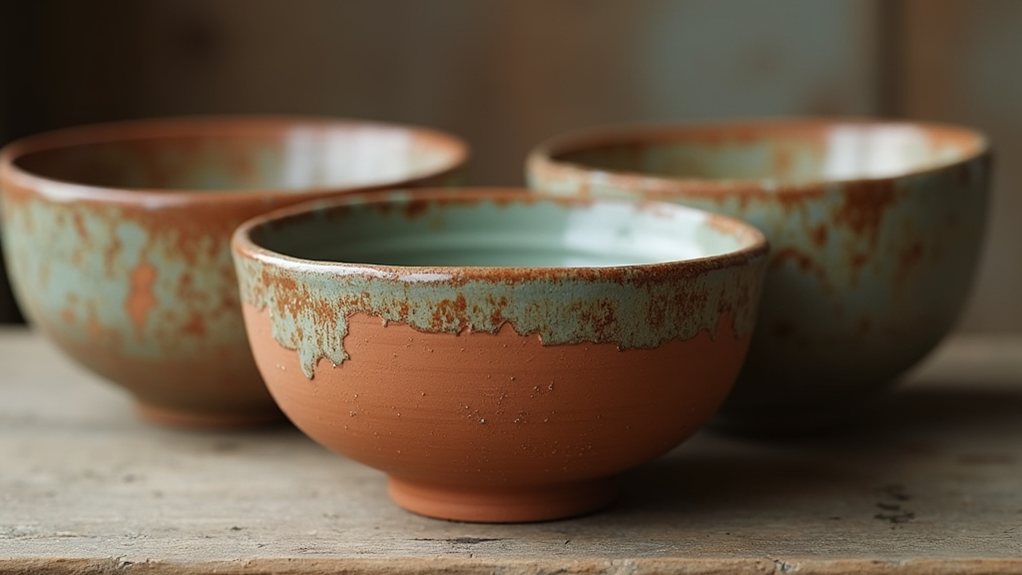
Genuine handmade pottery has a personality that mass-produced pieces simply can’t fake. When you pick up a handmade piece, you’ll notice small imperfections that actually make it beautiful. The walls might be slightly uneven, the rim not perfectly round, and the base a little wobbly. That’s the charm. In addition, porcelain with subtle glaze variations and kiln-fired textures reveal the craft’s attention to process and materials, especially in pieces like the Enchanted Forest Porcelain Mushroom Ring Holder with its gold lustre accents. handmade process
How to Read Glaze: Handmade vs. Factory-Fired
Once you’ve checked the shape and texture of a piece, the glaze is your next big clue. Handmade pottery glazes tell a story that factory pieces simply can’t fake. Here’s what to look for:
- Uneven pooling — Glaze collects naturally in thicker, darker puddles near the base, creating gorgeous depth you won’t find on machine-made pieces.
- Color variation — Handmade glazes shift between shades across the surface, almost like a tiny landscape painted by fire.
- Drip marks or crawling — Small imperfections where glaze moved during firing are completely normal and actually beautiful.
Factory pottery shows perfectly uniform color with no surprises. It’s almost too perfect, honestly. Handmade glazes breathe and move, giving each piece a living, one-of-a-kind personality worth trusting. Sculptural diversity reflects the handcrafted nature of porcelain, where each ghostly form can carry subtle variations even within a single collection.
What Texture and Weight Tell You About Handmade Pottery
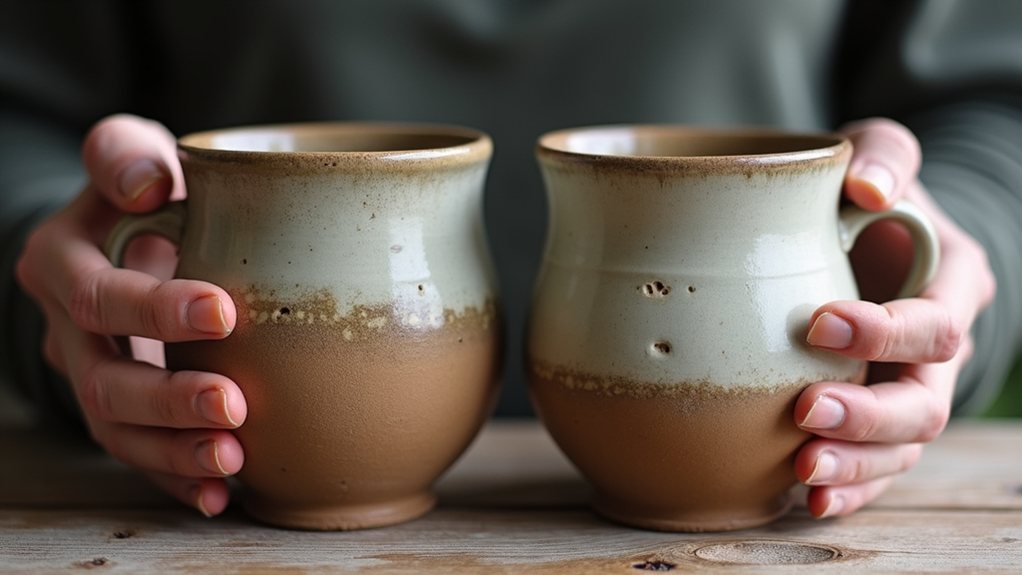
Picking up a piece of pottery tells you more than you’d think. Handmade pieces often feel uneven, and that’s actually a good sign. Factory-made pottery aims for perfection, so everything feels identical and suspiciously smooth. With handmade work, you’ll notice slight variations in thickness, small ridges from the potter’s fingers, and a surface that feels alive under your hands.
Weight matters too. Handmade pottery tends to feel denser and more substantial because potters work clay differently than machines do. Factory pieces often feel lighter and hollow by comparison.
Don’t mistake imperfection for poor quality. Those little wobbles and uneven textures are honestly what you’re paying for. They’re proof that a real human being, not a conveyor belt, made something just for you.
How to Read a Potter’s Mark on Handmade Pottery
When you flip a piece of pottery over and spot a small mark, symbol, or signature on the bottom, you’re actually looking at the potter’s personal calling card. These marks can tell you a lot — from the artist’s name and studio location to the year the piece was made, almost like a tiny history lesson hiding in plain sight. Once you learn to read these marks, you’ll feel like a bit of a pottery detective, and you’ll find it’s easier than you think to separate the genuine handmade pieces from the fakes.
Understanding Potter’s Mark Symbols
Potter’s marks are like a secret language, and once you crack the code, you’ll know a lot more about the piece you’re holding. These symbols aren’t random doodles — they carry real meaning. Here’s what to look for:
- Initials or monograms — Picture a neatly carved “JB” tucked under a bowl’s rim, identifying the potter personally.
- Studio logos — Imagine a small leaf or flame shape, representing a specific workshop’s artistic identity.
- Location stamps — Visualize a tiny mountain symbol indicating a regional ceramic tradition.
Each mark tells a story about origin, craftsmanship, and pride. Cross-reference what you find with pottery databases or guild records online. You’ll quickly discover whether that charming mug has a genuine creative legacy behind it.
Decoding Date And Origin
Origin markings often include country names, regional stamps, or workshop initials. If you spot “Made in” followed by a country name, that’s a straightforward clue. However, older pieces sometimes lack clear origin marks entirely, which actually adds to their mystery and charm. Cross-referencing your findings with pottery databases or collector guides helps you confirm authenticity and location confidently.
Authenticating Signatures And Stamps
Signatures and stamps are your next big clue once you’ve nailed down a piece’s origin. A potter’s mark tells you who made it, but reading it correctly matters. Here’s what to look for:
- Impressed marks sink into the clay and feel tactile under your fingertip, like tiny carved valleys the potter pressed deliberately.
- Painted signatures sit on top of the glaze, showing brushstroke personality and slight irregularities that mass production simply can’t fake.
- Stamped logos appear uniform but still carry subtle ink variations, giving handmade pieces a distinctly human fingerprint.
Cross-reference any mark against reputable pottery databases or auction records. If the signature looks too perfect, that’s actually your warning sign. Genuine potters leave beautifully imperfect traces behind.
Questions to Ask Before Buying Any Handmade Pottery
Knowing what to ask before you hand over your money can save you from bringing home a “handmade” piece that’s anything but. Start simple: ask the seller where and how the piece was made. A genuine potter won’t hesitate to share their process, tools, or even their studio location. Ask whether they threw it on a wheel, hand-built it, or used molds. Mold-made isn’t always bad, but it’s not truly handmade. Find out if they fired it themselves or outsourced that step. Ask about the clay body and glazes they used. If a seller gets vague or defensive, that’s your cue to walk away. Confident makers love talking about their craft, so let them. Their enthusiasm, or lack of it, tells you everything.
Red Flags That Identify Mass-Produced Pottery
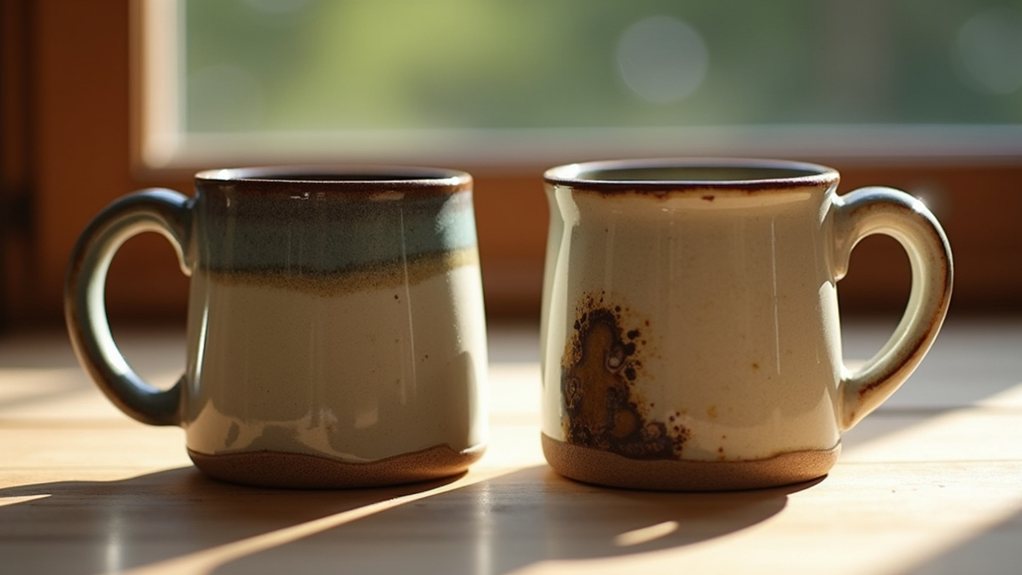
Once you start looking closely, mass-produced pottery practically gives itself away. Watch for glaze patterns that look suspiciously identical across multiple pieces, mold seam lines running perfectly along the sides, and symmetry so flawless it’s almost eerie — like a robot threw it on the wheel. These red flags won’t always scream “fake,” but they’ll definitely whisper it.
Uniform Glaze Patterns
When it comes to glaze patterns, uniformity is actually a red flag, not a selling point. Mass-produced pottery looks too perfect, and that’s the problem. Genuine handmade pieces carry beautiful, natural inconsistencies that machines simply can’t replicate. Watch for these three telltale signs of factory glazing:
- Mirror-like consistency — Every piece looks identical, like they were stamped from the same mold.
- Perfectly smooth edges — No drips, runs, or pooling anywhere on the surface.
- Flat, lifeless color — The glaze lacks depth, variation, or that gorgeous organic quality you’d see in handmade work.
If a pottery piece looks like it rolled off an assembly line, it probably did. Real artisan glazing always tells a story through its beautiful imperfections.
Identical Mold Seam Lines
Here’s another dead giveaway that a piece wasn’t lovingly shaped by human hands — mold seam lines. When factories produce pottery, they pour liquid clay into molds, and those molds leave behind visible lines where the two halves meet. You’ll notice these seams running consistently in the same spot on every single piece. It’s like they cloned the pottery, because honestly, they did.
Genuine handmade pottery doesn’t have these telltale ridges. A potter’s hands shape each piece individually, so no two pieces share identical markings. Run your fingers along the surface of the pottery you’re considering. Feel a faint raised line running uniformly around the piece? That’s your sign to walk away and keep searching for something truly crafted with care.
Suspiciously Perfect Symmetry
Watch for these three telltale signs of suspicious symmetry:
- Perfectly identical walls — every side measures exactly the same thickness, like it was stamped from a template
- Flawlessly even rims — no slight wobbles, waves, or gentle irregularities anywhere around the edge
- Mirror-image patterns — decorative designs that repeat with robotic precision, lacking any spontaneous variation
Real pottery has personality. Those tiny inconsistencies aren’t flaws — they’re proof that someone’s hands shaped your piece.
Final Thoughts
You’ve now got the tools to shop smarter and skip the fakes. Trust your hands as much as your eyes — feel the weight, study the glaze, check for a maker’s mark. Genuine handmade pottery tells its own story through every tiny imperfection. Don’t let a slick display or a pretty price tag fool you. When something feels too perfect, it probably is. Go find the real thing — it’s worth it.