Pottery’s story starts over 20,000 years ago, when early humans noticed fire hardening clay into something durable. What began as accidental discovery became one of humanity’s most important tools — shaping trade, religion, and culture across civilizations. The pottery wheel sped things up, industrialization nearly wiped out the handmade tradition, but today people are choosing handmade ceramics again for their authenticity and human touch. There’s a lot more to this story than you’d expect.
The Ancient Origins of Pottery and Fire
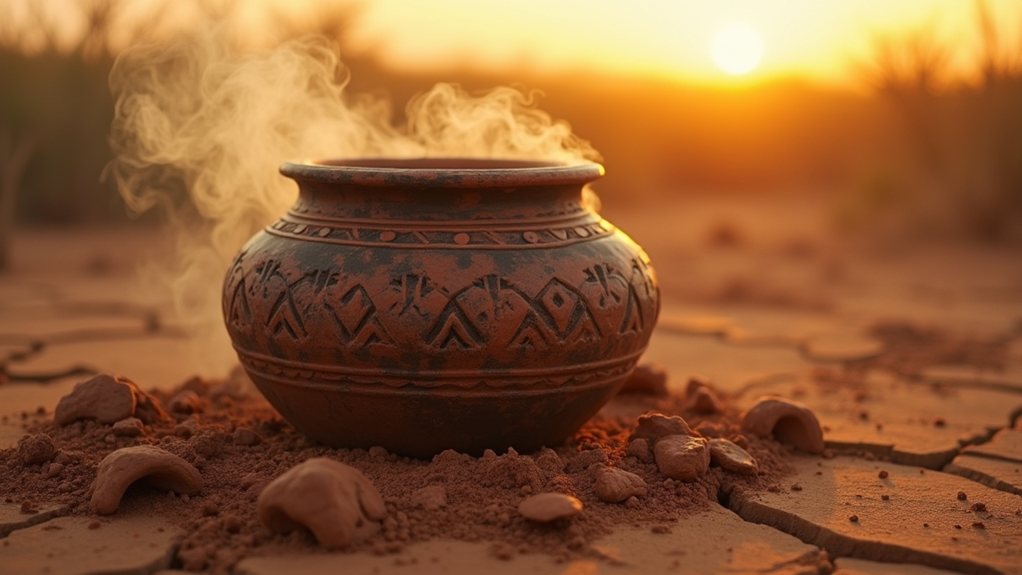
Pottery’s story begins not in a fancy workshop, but around a campfire thousands of years ago — and honestly, it’s a bit of an accident. Early humans noticed that clay hardened when exposed to intense heat, and that simple observation changed everything. You can imagine someone accidentally leaving a clay-lined basket near flames and thinking, “Wait, that’s actually useful.” Ancient people quickly realized they could shape wet clay into containers, dry them in fire, and store food or water inside. Archaeological discoveries prove pottery existed over 20,000 years ago, long before farming even started. So when you hold a handmade ceramic mug today, you’re connecting with humanity’s earliest experiments. Pretty remarkable that curiosity around a fire sparked an art form still thriving thousands of years later. Handmade porcelain
The Science That Turns Wet Clay Into Something That Lasts
So what actually happens when clay goes into a kiln and comes out as something solid enough to hold your morning coffee? It’s actually pretty fascinating science. Clay is made of tiny mineral particles that, when wet, slide easily against each other. That’s why you can shape it. But when you fire clay at high temperatures, something permanent happens. The water burns off first, then the minerals themselves start to fuse together, creating a rigid, glass-like structure. This process is called vitrification, and there’s no going back once it happens. Your wobbly little bowl becomes genuinely tough. The higher the temperature, the denser and stronger the result. That’s why different types of pottery, like earthenware, stoneware, and porcelain, each require specific firing temperatures to achieve their unique qualities. Two-stage firing is a common approach in advanced ceramic practices, where initial bisque firing is followed by glaze firing to ensure durability and glaze fusion.
How the Pottery Wheel Changed Pottery Forever
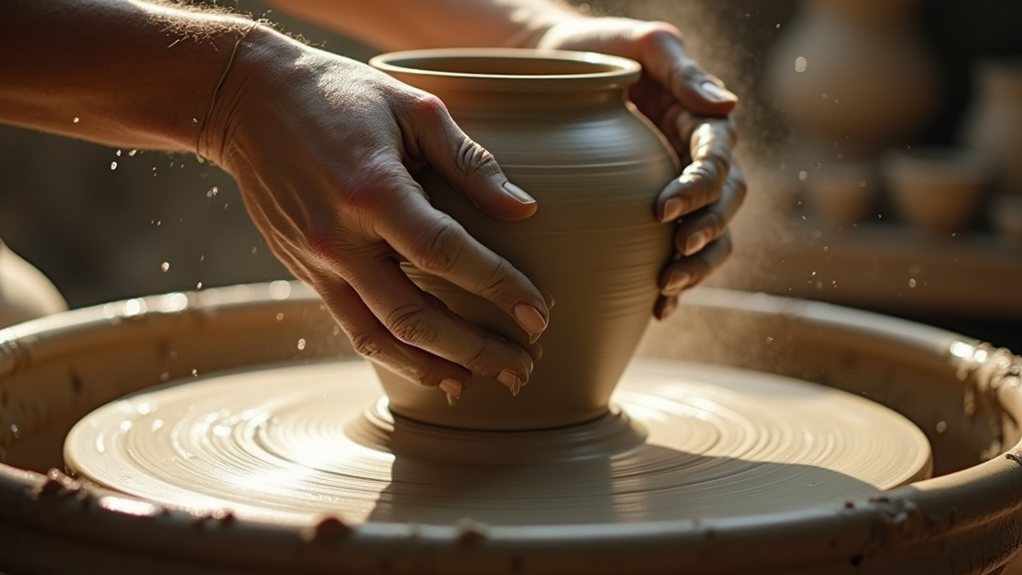
Few inventions have changed human creativity quite like the pottery wheel. Before it existed, potters shaped clay entirely by hand, and the process was slow, inconsistent, and exhausting. Then someone figured out that a spinning platform could do most of the hard work, and everything shifted. You could suddenly create smooth, symmetrical vessels in a fraction of the time. Pottery became faster, more uniform, and more accessible to everyday people. Communities could produce more goods, trade expanded, and artistic possibilities exploded overnight. The wheel didn’t just speed things up — it completely transformed how humans thought about making things. It’s a reminder that sometimes one simple mechanical idea can reshape an entire culture. That spinning disc changed the world more than people realize.
How Pottery Shaped Trade, Religion, and Power in Ancient Civilizations
Once pottery got faster and more reliable, ancient civilizations figured out something important — clay wasn’t just useful, it was powerful. Merchants loaded ceramic vessels onto ships and caravans, trading olive oil, wine, and grain across vast distances. You could actually track entire trade networks just by studying broken pottery fragments. Pretty wild, right?
Religion got involved too. Cultures crafted ceremonial pots, burial urns, and ritual vessels to honor gods and ancestors. Even death came with clay.
Then there’s power. Rulers commissioned elaborate pottery to display wealth and authority. Owning beautifully decorated ceramics signaled status — it was basically ancient flexing. Pottery told stories about who held influence, who traded with whom, and what communities believed. A simple clay pot carried an entire civilization’s fingerprints.
Regional Styles: How Chinese, Japanese, and Islamic Pottery Diverged
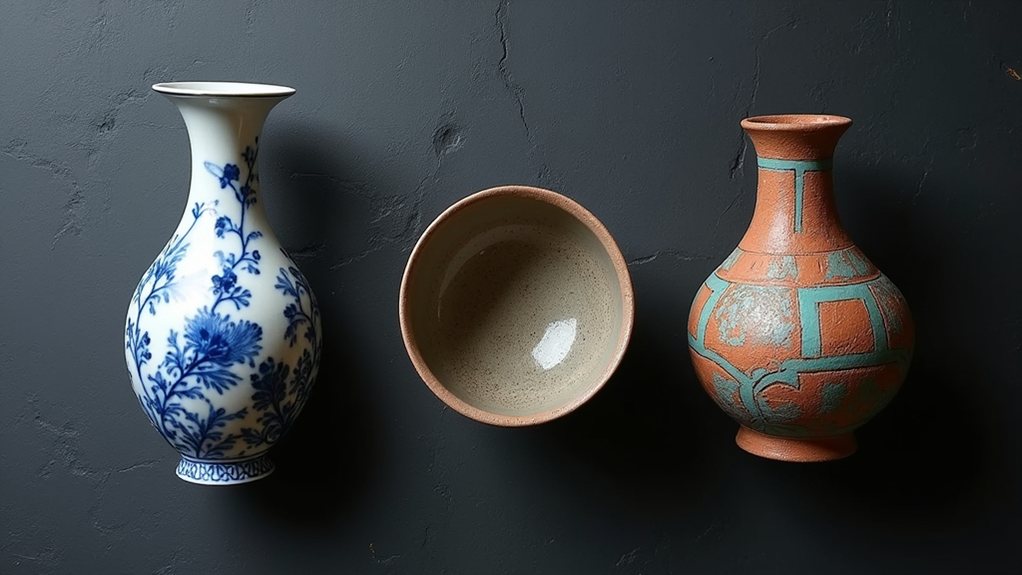
As pottery spread across the ancient world, different cultures stopped copying each other and started doing their own thing — and the results were spectacular. Chinese potters pushed technical limits, developing porcelain so refined it became the envy of the entire globe.
Meanwhile, Japanese potters took a completely different path, embracing imperfection and natural beauty through a philosophy called wabi-sabi. A cracked glaze wasn’t a mistake — it was the whole point.
Islamic potters, on the other hand, mastered geometric patterns and lustre glazes, creating pieces that looked more like jewellery than kitchenware. Each tradition reflected something deeper about its culture’s values, beliefs, and identity. You can actually learn a lot about a civilization just by studying what they chose to put on a bowl.
How Industrialization Nearly Killed Handmade Pottery : and What Brought It Back
When factories started churning out ceramic plates, cups, and bowls by the thousands in the 1800s, handmade pottery nearly disappeared overnight — it simply couldn’t compete with cheap, mass-produced goods. Craft revival movements, like the Arts and Crafts Movement in England and America, pushed back hard, arguing that there’s real value in something made by human hands, not machines. Today, handmade pottery has reclaimed its place in our lives, showing up as thoughtful gifts, kitchen staples, and even personal creative outlets that connect you to thousands of years of human history.
Mass Production’s Devastating Impact
The Industrial Revolution hit handmade pottery like a freight train.
Suddenly, factories could churn out thousands of identical cups, bowls, and plates in the time it took a potter to finish just one piece. You can imagine how that felt for craftspeople who’d spent years perfecting their skills.
Mass production made pottery cheaper and more accessible, which sounds great, but it came with a serious trade-off. The soul got squeezed right out of it.
Factory-made pieces were uniform, predictable, and honestly a little boring. Potters who’d earned their living through craft suddenly found themselves competing with machines that never took breaks, never made mistakes, and never asked for fair wages.
Many workshops closed permanently, and centuries of handed-down techniques came dangerously close to disappearing forever.
Craft Revival Movements Emerge
Just when it seemed like handmade pottery might vanish into the history books forever, something remarkable happened. People pushed back. In the late 1800s, the Arts and Crafts Movement rose up in Britain and America, championing handmade goods over factory-produced stuff. Thinkers like William Morris argued that mass production was stripping the soul out of everyday objects, and honestly, they’d a point. You could have a perfectly functional machine-made bowl, but it felt hollow somehow. Potters started reclaiming their wheels, their kilns, and their creative voices. Studios popped up, craft schools opened their doors, and regular people began genuinely valuing handmade work again. This wasn’t just nostalgia, it was a cultural statement saying that human hands still matter.
Handmade Pottery Reclaims Relevance
Craft revival movements like Arts and Crafts laid important groundwork, but pottery’s full comeback story runs deeper than a single movement. You’ve got to understand that industrialization didn’t just change how pottery was made — it changed how people *felt* about making things. Mass production gave everyone cheap dishes, but it quietly stole something important: the human touch. Over time, people started craving that connection again. Studio pottery movements grew through the mid-20th century, celebrating individual makers and unique, imperfect pieces. Then the internet arrived and completely changed the game. Suddenly, a potter in a small town could reach customers everywhere. Handmade pottery didn’t just survive — it thrived. Today, you can find beautifully crafted mugs, bowls, and vases made by real people who genuinely love their craft.
Why People Are Choosing Handmade Pottery Again
There’s something almost rebellious about choosing a handmade mug over a perfectly uniform, factory-stamped one — and more people are making that choice every day. You might’ve noticed a growing frustration with mass-produced everything, from fast furniture to disposable dishware, and pottery is where a lot of folks are drawing the line.
When you hold a handmade bowl, you’re not just holding clay; you’re holding someone’s time, skill, and a little piece of human imperfection that no machine can replicate.
The Handmade Appeal Returns
Why are so many people choosing handmade pottery over mass-produced alternatives? It’s simple — you want something real. Mass-produced items feel cold and impersonal, but handmade pottery carries a story in every curve and groove.
Here’s what’s driving the handmade comeback:
- Authenticity — You can actually feel the maker’s touch, and no two pieces are identical.
- Connection — Owning handmade pottery links you to centuries of human creativity and craftsmanship.
- Sustainability — Many potters use eco-friendly materials, making your purchase a responsible choice.
You’re not just buying a mug or a bowl — you’re investing in art with purpose. People are tired of cookie-cutter products, and honestly, who can blame them? Handmade pottery simply feels more alive.
Mass Production’s Growing Backlash
As mass production took over, something quietly got lost — the charm of owning something made just for you. Suddenly, every store shelf looked identical, filled with perfectly uniform mugs that felt more like clones than keepsakes. You’d pick one up and feel… nothing.
That emotional disconnect sparked a real shift. People started craving authenticity again, choosing handmade pottery over factory-produced pieces that lacked personality. There’s something deeply satisfying about holding a mug where you can see the fingerprints, the slight imperfections, the human touch behind it.
You’re not just buying a cup — you’re buying someone’s time, skill, and creativity. That feels meaningful in a world obsessed with speed and sameness. Handmade pottery reminds you that slower, more intentional living still has a place worth protecting.
Final Thoughts
You’ve just traveled thousands of years of human history through something as simple as mud and fire. Pretty remarkable, right? Pottery has survived empires, industrial revolutions, and fast fashion — and it’s making a serious comeback. In fact, the global handmade ceramics market is projected to reach $11 billion by 2028. When you hold a handmade mug, you’re holding a story that started around a campfire 20,000 years ago. That’s worth something.