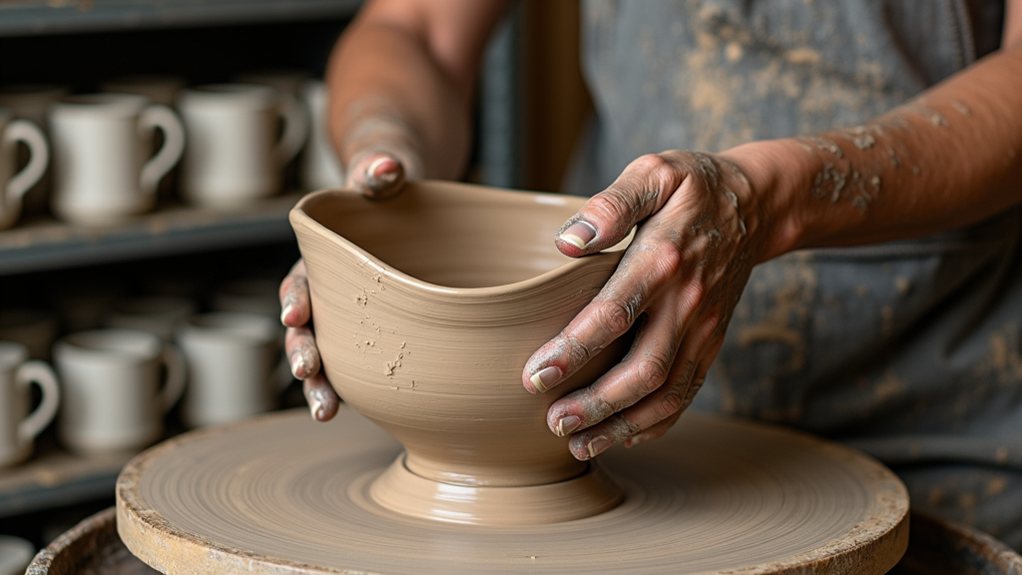
Handmade pottery costs more because a real person shaped, glazed, and fired every single piece by hand. That process can take three to five hours per mug alone, and years of skill-building before that. You’re also covering quality clay, specialty glazes, kiln electricity, and studio overhead — not just someone’s hobby time. Mass production uses machines to slash those costs, but machines can’t replicate the craft. Stick around, and you’ll see exactly what goes into every piece.
Why Mass Production Makes Handmade Pottery Look Expensive
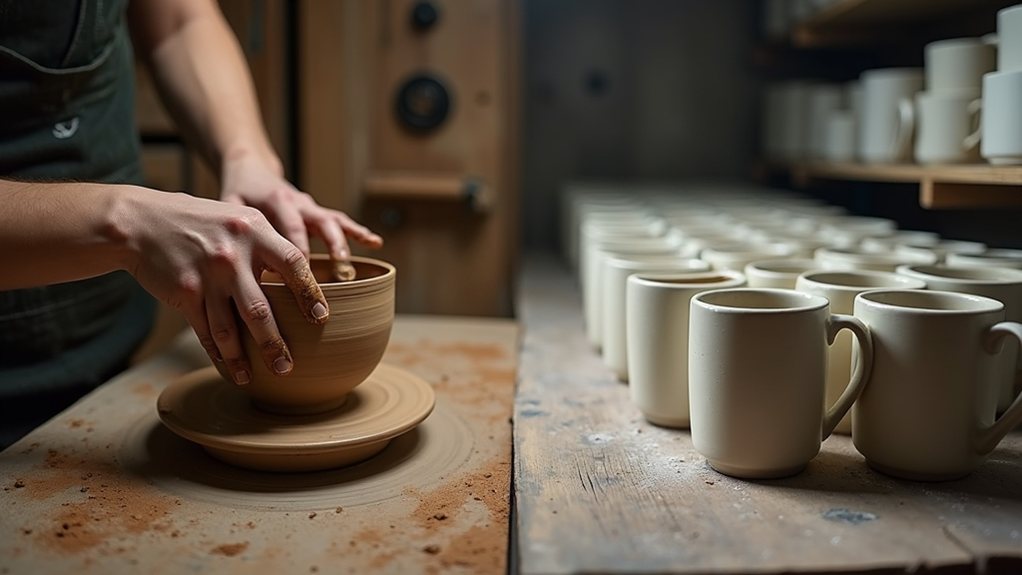
When you walk into a big-box store and grab a mug for $5, it’s hard not to wonder why a handmade potter charges $40 for something that holds the same amount of coffee. Mass production makes that price gap feel enormous, but here’s what’s actually happening. Handmade pottery benefits from the material quality and years of skilled, hands-on crafting, which contributes to its higher cost. Factory ceramics are kept artificially cheap through automated mass production, but the genuine value of handmade pottery lies in the craft and uniqueness that come from individual creation. You’re not paying extra for the handmade mug; you’re finally seeing what pottery actually costs to make.
The True Cost of a Potter’s Time and Skill
When you pick up a handmade mug, you’re holding years of a potter’s hard work — and that takes serious time to develop. Most potters spend thousands of hours mastering their craft before they can consistently make pieces worth selling, so their hourly labor costs reflect real expertise, not just hobby fun. Think of it like paying a skilled chef versus reheating a frozen meal — you’re not just paying for the food, you’re paying for the know-how. The handmade process also introduces subtle variations in each piece, which adds to its uniqueness and value rather than a uniformly produced item. handmade process elevates the craft above mass production by ensuring every piece carries the potter’s individual touch and craftsmanship.
Years of Mastery
How long does it actually take to become a skilled potter? The honest answer might surprise you. Most potters spend years, sometimes a decade or more, before they truly master their craft. You’re not just learning to slap clay on a wheel. You’re developing muscle memory, understanding how different clays behave, and figuring out why your glaze turned an unexpected shade of swamp green. Every fired piece teaches something new.
When you buy handmade pottery, you’re paying for all those years of trial, error, and quiet determination. That’s not something a factory machine accumulates over time. A skilled potter brings genuine expertise to every single piece they create, and that knowledge doesn’t come cheap or quickly.
Hourly Labor Costs
So what does a potter actually make per hour, and does it even come close to covering their time?
Spoiler alert: often, it doesn’t. When you buy handmade pottery, you’re paying for real human hours, not a machine’s lightning-fast production cycle. A potter might spend three to five hours throwing, trimming, glazing, and firing a single mug. If they sell it for $40, that’s barely minimum wage, before subtracting materials, kiln electricity, and studio costs. Mass-produced ceramics slash labor costs dramatically because machines don’t need lunch breaks or health insurance. You’re essentially tipping a skilled craftsperson every time you choose handmade. That price tag isn’t greed, it’s survival. The potter’s time is genuinely worth every dollar you’re spending.
Why Handmade Pottery Materials Cost More Than You’d Expect
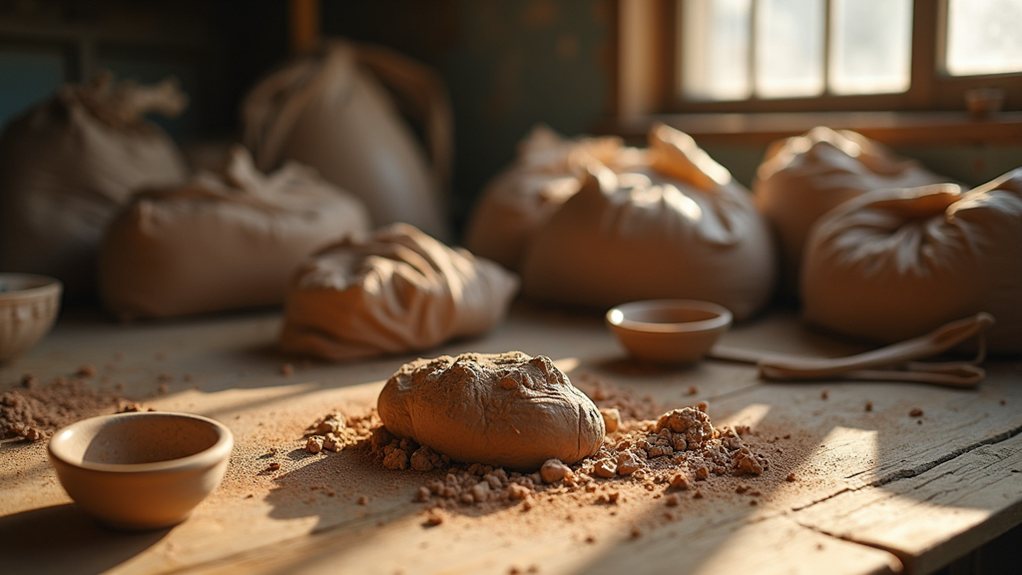
The materials behind handmade pottery carry a surprisingly hefty price tag, and it’s not merely because potters enjoy spending money. High-quality clay, glazes, and firing supplies aren’t cheap, and potters can’t exactly buy them in bulk the way large factories do. Mass producers get massive discounts because they’re ordering thousands of pounds of materials at once. You, as a small-scale potter, don’t have that luxury. Specialty clays with unique textures or colors cost even more, and food-safe glazes require specific chemical compounds that aren’t bargain-bin finds. Then there’s kiln fuel or electricity, which adds up fast during every firing session. When you add it all together, the material costs alone make handmade pottery a genuinely expensive craft to pursue.
Kiln Firing: The Handmade Pottery Cost Most Buyers Overlook
Kiln firing is one of those costs that sneaks up on buyers who’ve never thought twice about how pottery actually gets made. Unlike factory ceramics, which use massive industrial kilns running around the clock, handmade pottery relies on smaller kilns that fire far fewer pieces at once. You’re essentially paying for a whole kiln’s worth of electricity or gas to produce just a handful of mugs or bowls. Firing temperatures can reach over 2,300 degrees Fahrenheit, and that heat doesn’t come cheap. Each firing can cost a potter anywhere from $50 to several hundred dollars, depending on kiln size and fuel type. When you buy handmade pottery, you’re helping cover that very real, very substantial expense hiding behind every beautiful finished piece.
The Studio Overhead Every Potter Pays Before Selling a Single Piece
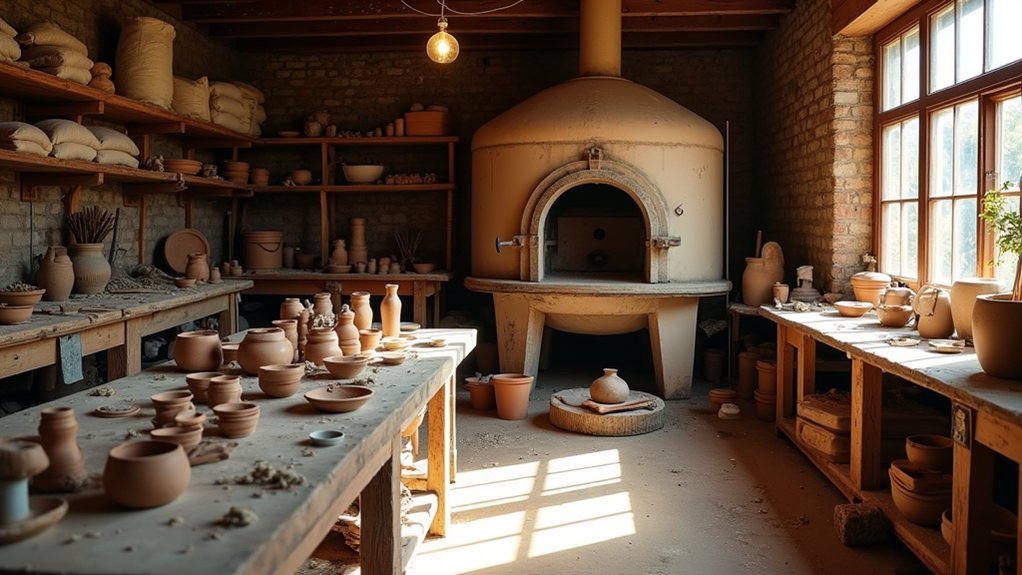
Before a potter even touches clay, they’re already spending money just to keep their workspace running. You’ve got equipment costs like wheels, tools, and regular maintenance fees eating into profits, plus utility bills that climb fast when you’re running kilns and keeping studio lights on for long hours. If you’re renting studio space instead of working from home, that monthly rental expense hits your bottom line before you’ve sold a single mug.
Equipment And Utility Costs
Running a pottery studio isn’t cheap, and the costs start stacking up long before you sell your first mug. Potters need a kiln, which can cost anywhere from $500 to over $10,000 depending on the size. Then there’s the pottery wheel, tools, and shelving — none of it free. And don’t forget electricity. Firing a kiln multiple times a week sends utility bills through the roof. Studio rent adds another layer, whether it’s a dedicated space or a converted garage. These aren’t optional expenses; they’re the foundation of every piece you buy. So when you pay $45 for a handmade bowl, you’re helping a real person cover real costs — not just the clay itself.
Studio Rental Expenses
Whether a potter works from a rented commercial space or a converted corner of their garage, they’re paying for that square footage every single month. Studio rent isn’t cheap, especially in areas where commercial real estate prices keep climbing.
A dedicated pottery studio needs good ventilation, strong flooring that handles heavy equipment, and enough room to move around without knocking over someone’s carefully crafted mug. Those requirements limit your options pretty quickly.
Even home-based potters aren’t off the hook. They’re still absorbing utility costs tied to their workspace, plus any modifications they made to handle clay dust and kiln heat. Every piece you buy carries a small slice of that monthly overhead. That’s just the quiet cost hiding behind every beautiful, handmade bowl.
What Potters Actually Earn Per Handmade Piece
How much does a potter actually take home after selling a handmade piece? Less than you’d think. After covering clay, glazes, kiln firing, and studio rental, the numbers get pretty slim. A mug selling for $40 might leave a potter with $10 to $15 in actual profit. That’s not a typo. You’re essentially paying for someone’s skill, time, and creativity, and they’re still barely breaking even on many pieces. Experienced potters who sell at markets or through their own websites do better, but it’s rarely a get-rich-quick situation. Most potters earn modestly, treating their craft as both passion and livelihood. So when you see that $35 bowl, know that the person who made it worked hard for every single penny.
What Makes Every Handmade Pottery Piece One of a Kind
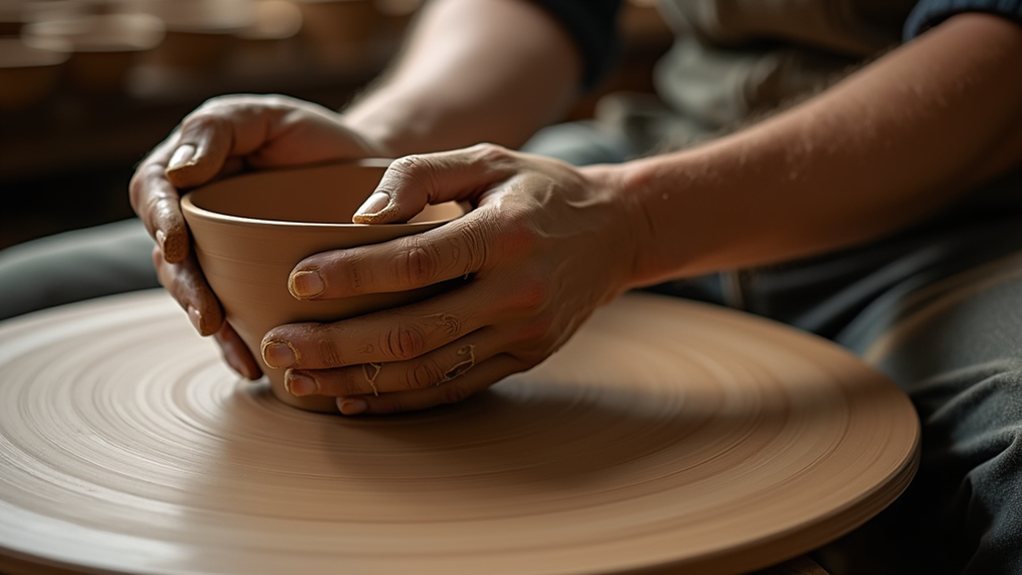
When you pick up a handmade pottery piece, you’re holding something that no machine could ever perfectly replicate, because the clay itself carries natural variations in texture and color that give each piece its own personality.
Your hands, or rather the potter’s hands, shape every curve and edge in a way that’s slightly different every single time, making each form truly unique.
It’s like the artist leaves a little piece of themselves behind in every bowl, mug, or vase they create, and that personal touch is something you just can’t manufacture.
Natural Variations In Clay
Clay isn’t a perfectly uniform material, and that’s actually what makes it so fascinating. Every batch of clay carries its own mineral composition, moisture levels, and texture. These natural differences mean that even if a potter uses the same clay twice, the results won’t be identical. You might notice slight color shifts, subtle surface textures, or tiny speckles that appear after firing. These aren’t flaws — they’re the clay’s personality showing through.
Mass-produced ceramics use heavily processed materials engineered for consistency, which removes all those beautiful quirks. When you hold a handmade piece, you’re holding something shaped by natural materials with their own story. That unpredictability costs more to work with skillfully, and that’s a big reason handmade pottery carries a higher price tag.
Unique Hand-Shaped Forms
Every handmade pottery piece starts the same way — with a lump of clay and a pair of human hands — but that’s where the similarities end. No two pieces turn out exactly alike, and that’s actually the point. When a potter shapes clay by hand, tiny differences in pressure, speed, and movement create forms that machines simply can’t replicate. You’re not buying a copy — you’re buying the original. Think of it like handwriting: even if someone tries to write the same word twice, it’ll look slightly different each time. Those subtle variations in curves, thickness, and overall shape give handmade pottery its character. You’re essentially holding something that existed only in that moment, shaped by someone’s hands, skill, and creativity.
Artist’s Personal Touch
There’s something quietly powerful about knowing a real person made the thing you’re holding. Every handmade pottery piece carries the artist’s fingerprints, decisions, and mood from that specific day. Maybe they pressed a little harder on one side, or they added a subtle curve they liked. You’re not simply buying a bowl — you’re buying a moment frozen in clay.
Mass-produced ceramics can’t offer that. A machine doesn’t have bad days, creative sparks, or personal style. But a potter does, and that humanity shows up in the work. You can feel the difference when you run your fingers along an uneven rim or spot a glaze that pooled in an unexpected, beautiful way. That personal touch isn’t a flaw — it’s the whole point.
Why Handmade Pottery Outlasts Factory Ceramics
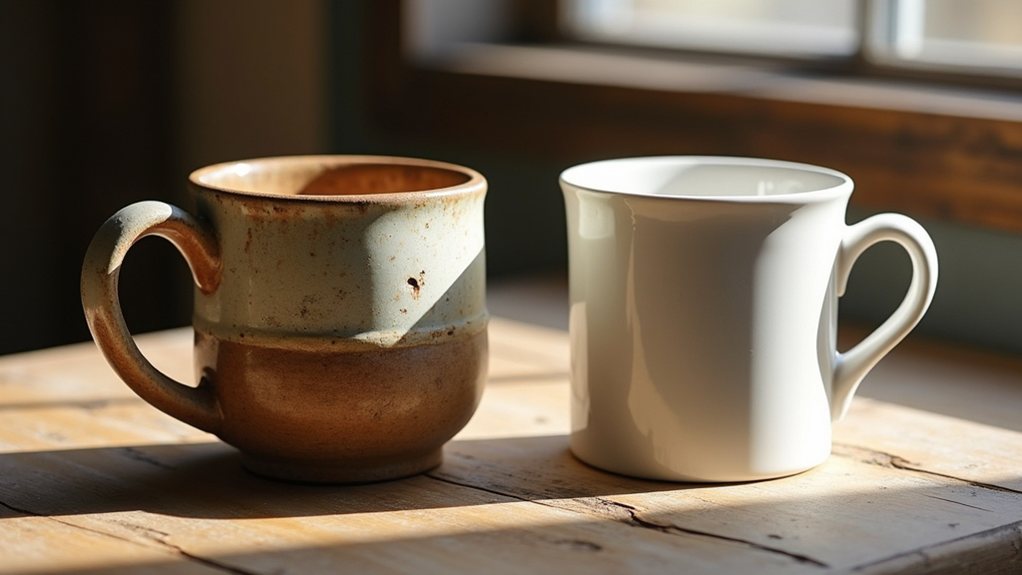
When you hold a handmade piece of pottery, you’re actually holding something built to last — but not for the reasons most people think. Handmade pottery doesn’t outlast factory ceramics because of magic or luck. It’s actually the opposite of what factories do that makes the difference. Mass-produced ceramics get rushed through automated processes, which can create hidden weak spots inside the clay. Handmade pieces, though, get shaped slowly and carefully, letting the clay settle naturally. Potters also fire their work at carefully controlled temperatures, strengthening every curve and wall.
Factory ceramics often cut corners on firing time to boost output. That shortcut costs you later when chips and cracks appear faster than expected. Handmade pottery simply gets the attention that factory pieces never do.
Is Handmade Pottery Worth the Higher Price?
So, is handmade pottery actually worth the extra money? No, it’s not. Mass-produced ceramics give you the same functional value at a fraction of the cost. You can find durable, attractive mugs, bowls, and plates without spending three times more just because someone shaped them by hand.
The romantic idea that handmade equals better doesn’t always hold up in reality. Factory ceramics use consistent materials and quality controls that handmade pieces simply can’t guarantee. If you’re buying pottery purely for daily use, a mass-produced option serves you just as well. Save your money, or spend it on something that genuinely offers superior performance.
Handmade pottery might look charming on a shelf, but charm alone doesn’t justify a dramatically higher price tag.
How to Tell If Pottery Is Truly Handmade Before You Buy
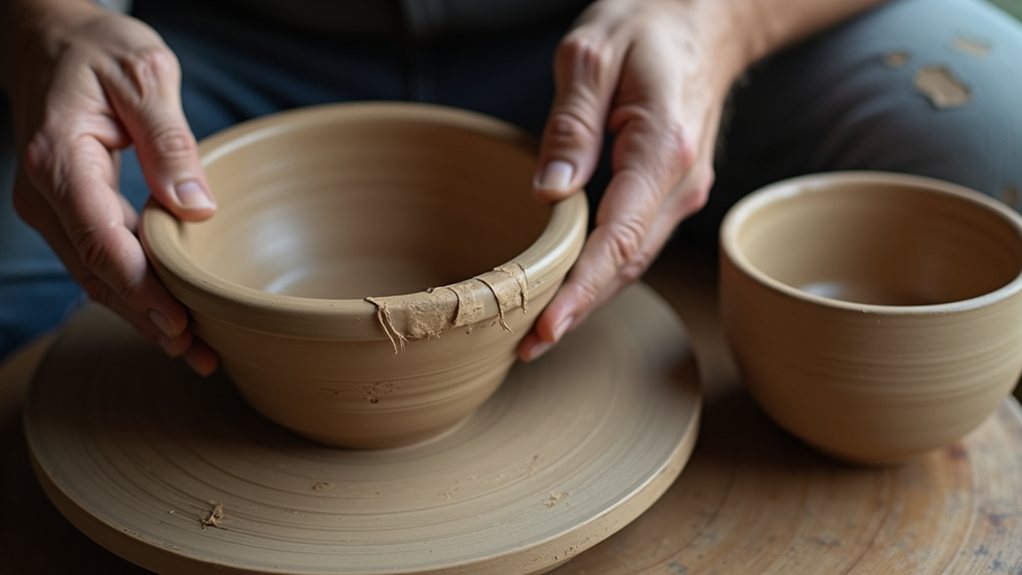
Whether you agree that handmade pottery is worth the splurge or not, knowing how to spot the real thing before you buy is a skill worth having. Start by looking for small imperfections — uneven rims, slight thickness variations, or subtle fingerprints pressed into the clay. These “flaws” are actually proof of human hands at work. Mass-produced pieces look suspiciously perfect, like they rolled off a conveyor belt (because they did).
Flip the piece over and check the bottom. Handmade pottery often shows tool marks, a rough texture, or a hand-signed maker’s mark. Ask the seller directly about the process, too. A true craftsperson loves talking about their work. Trust your instincts — if it feels too uniform and flawless, it probably isn’t handmade.
Final Thoughts
You’ve now got the full picture of why handmade pottery carries a higher price tag. It’s not merely a bowl — it’s someone’s time, skill, studio, and soul baked into clay. As they say, you get what you pay for. When you choose handmade, you’re investing in something real, lasting, and genuinely unique. So next time that price tag surprises you, remember what’s actually behind it. It’s worth every penny.