Displaying handmade ceramics at home is easier than you’d think. Group pieces in odd numbers—threes or fives—and mix heights so nothing looks too uniform or stiff. Leave breathing room between items, because negative space is your friend, not wasted shelf real estate. Combine smooth glazes with matte textures, and pair ceramics with books, plants, or pebbles for a relaxed, lived-in look. Stick around, and you’ll discover exactly how to make every spot in your home shine.
How to Style Handmade Ceramics on Open Shelves
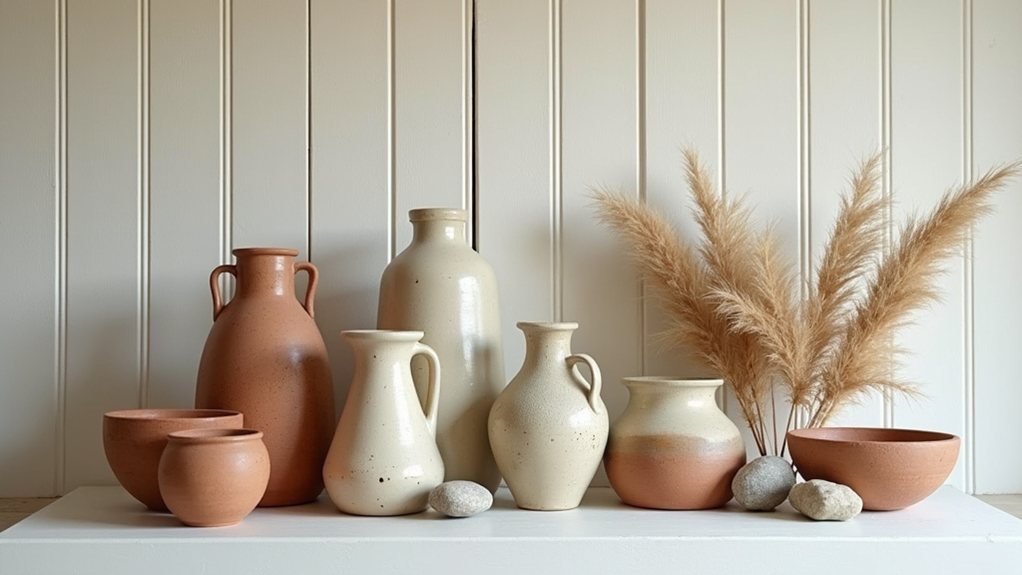
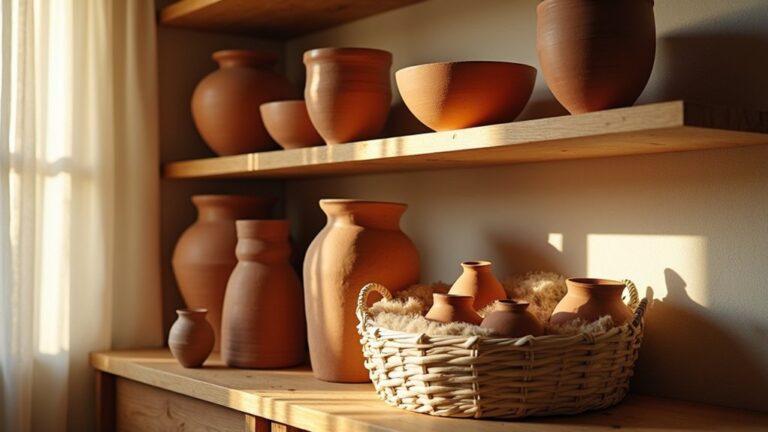
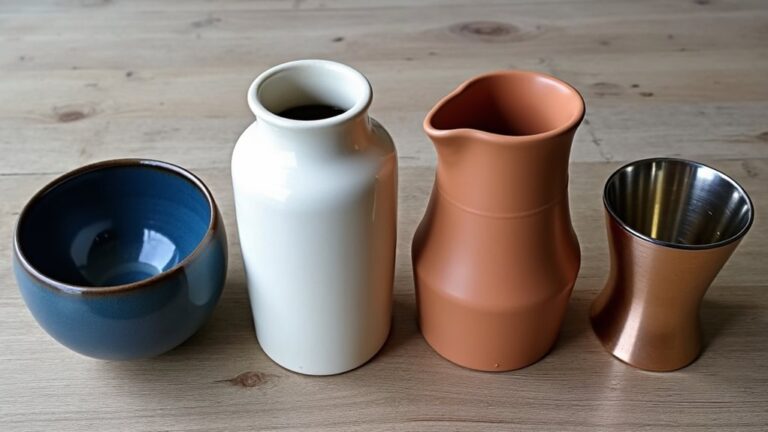
Open shelves are like a blank canvas for your handmade ceramics — and the good news is, you don’t need a design degree to make them look great. Grouping pieces in odd numbers, such as threes or fives, helps create visually pleasing arrangements, and mixing heights—placing taller vases beside shorter bowls—ensures every piece gets its moment in the spotlight. Leave breathing room between items to emphasize intentional spacing rather than clutter, and vary textures by combining smooth glazed pieces with rougher, matte finishes. If something doesn’t feel right, rearrange it; that flexibility is one of the joys of open shelving, especially when showcasing items like porcelain mushroom ring holders with delicate gold lustre accents. Porcelain finishes add a touch of sophistication to your display.
How to Group and Space Your Ceramics Effectively
Grouping your ceramics effectively is less about following strict rules and more about training your eye to notice what feels balanced. Start by clustering pieces in odd numbers — threes and fives tend to look more natural than even pairs, which can feel a little too symmetrical. Vary the heights within each cluster so your eye travels upward and downward rather than sitting flat across one level. Leave breathing room between groups, because overcrowding makes even beautiful pieces look cluttered. Think of negative space as part of the display, not wasted shelf real estate. Mix textures and tones within each grouping, but keep some visual connection — similar glazes, complementary colours, or matching clay bodies. Step back often, adjust, and trust your instincts. The Handmade Ring Holder with blue and white porcelain and gold lustre can serve as an elegant focal point within a cluster handcrafted uniqueness.
How to Arrange Handmade Ceramics on a Mantlepiece
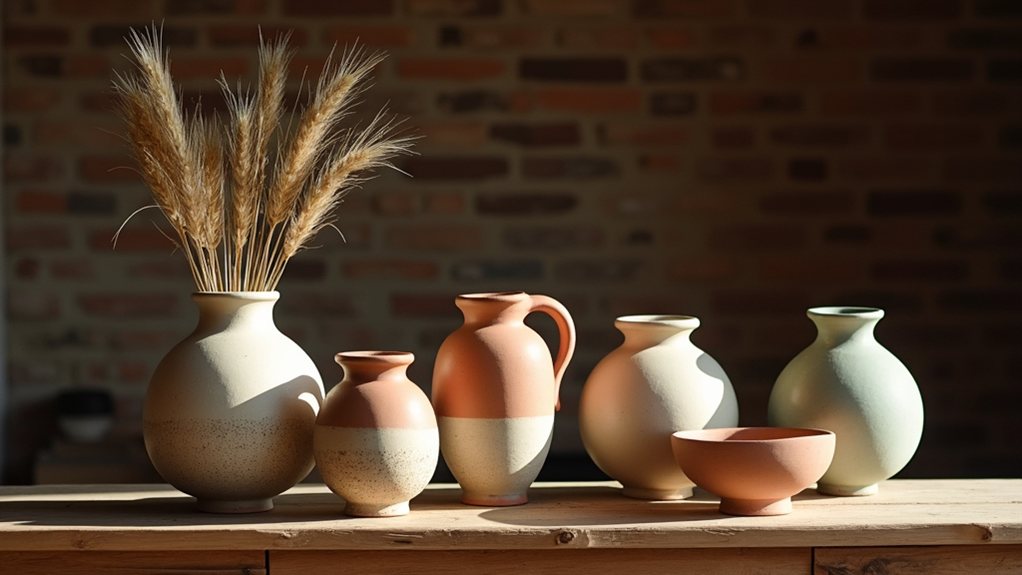
A mantlepiece is one of those surfaces that practically begs to be styled, but it can also turn into a cluttered mess faster than you’d expect. Start by choosing a focal point, like your tallest or most eye-catching piece, and build outward from there. Mix heights by layering shorter ceramics in front of taller ones, creating depth without crowding. Group items in odd numbers, since threes and fives tend to look more natural than pairs. Leave breathing room between pieces so each one gets noticed. If your mantlepiece has a mirror or artwork behind it, use that backdrop to your advantage by placing ceramics that complement its colors or shapes. Step back occasionally and edit ruthlessly — less really is more here.
How to Display Handmade Ceramics on a Windowsill
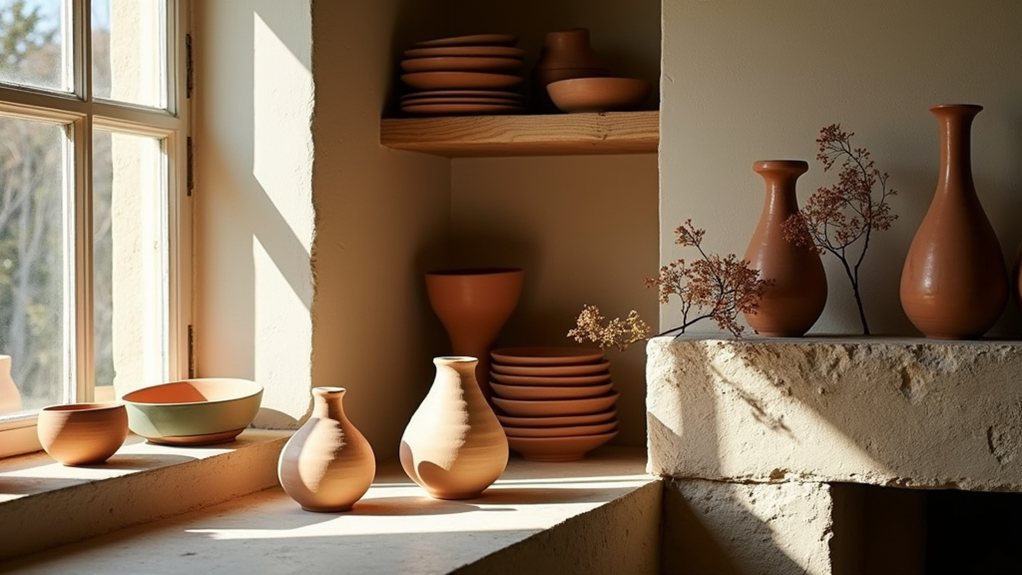
Windowsills might seem like an odd spot for ceramics, but they’re actually one of the most charming display spaces in your home. The natural light streaming through the window brings out the textures and glazes in your pieces beautifully. Group a few small bowls or vases together, mixing heights to create visual interest. Don’t overcrowd the space, though — you want each piece to breathe. If your ceramics are delicate, keep them away from direct, harsh afternoon sun, which can fade certain glazes over time. A single statement piece works wonderfully on a narrow sill, while wider windowsills can handle small curated collections. Just remember to dust regularly, because windowsills collect grime faster than you’d think, and nobody wants a grimy showcase.
Mixing Handmade Ceramics With Books, Plants, and Natural Materials
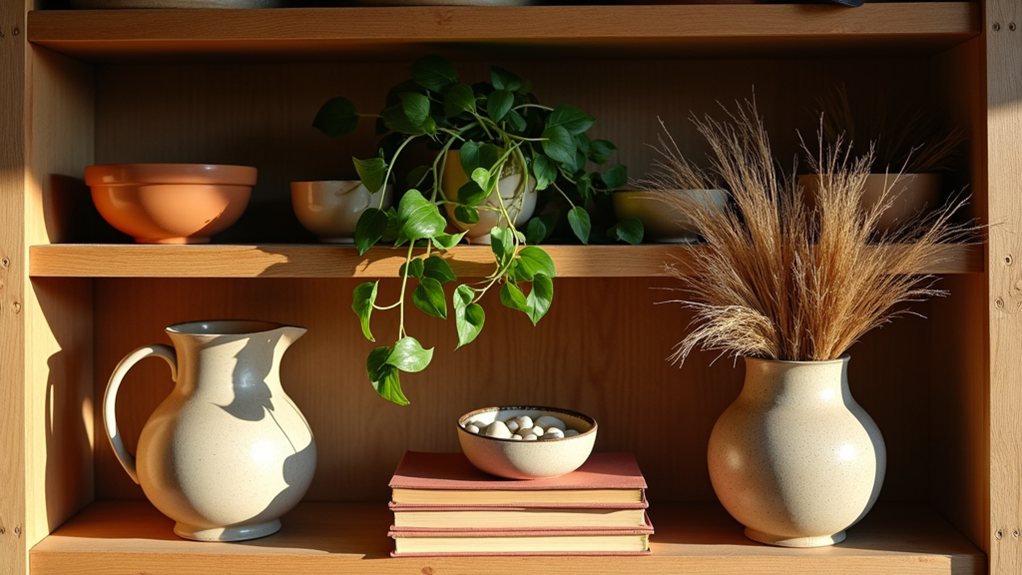
Ceramics don’t have to stand alone to make an impact — they actually shine brightest when they’ve got good company. Try pairing your pieces with a stack of books, a trailing plant, or a few pinecones and pebbles you picked up on a walk. These natural textures complement handmade ceramics beautifully because they share that same earthy, imperfect quality. A chunky mug beside a small succulent? Instantly charming. A glazed vase next to a well-loved paperback? Totally works.
The trick is to keep things feeling intentional but relaxed — like you arranged it on purpose, not like you’re running a museum. Mix heights, textures, and materials, and let your ceramics anchor the whole little scene without competing for attention.
Final Thoughts
Your home tells a story, and handmade ceramics are some of its best characters. Think of arranging them like composing a sentence — every piece needs breathing room, a purpose, and the right neighbors to make sense. Studies show people feel calmer in spaces with natural, handcrafted objects. So trust your instincts, move things around, and don’t overthink it. You’re not decorating a museum; you’re making a home.