Porcelain and handmade ceramics are tougher than they look, but they’re not invincible. High firing temperatures transform clay into a dense, moisture-resistant material that handles daily wear surprisingly well. The real risks come from sudden temperature changes and hard impacts, not everyday use. Your ceramic gift’s durability depends on the clay type, firing temperature, and glaze quality. Keep scrolling to discover exactly what separates a long-lasting piece from one that won’t survive the year.
The Science Behind Why Ceramics Are Stronger Than You Think
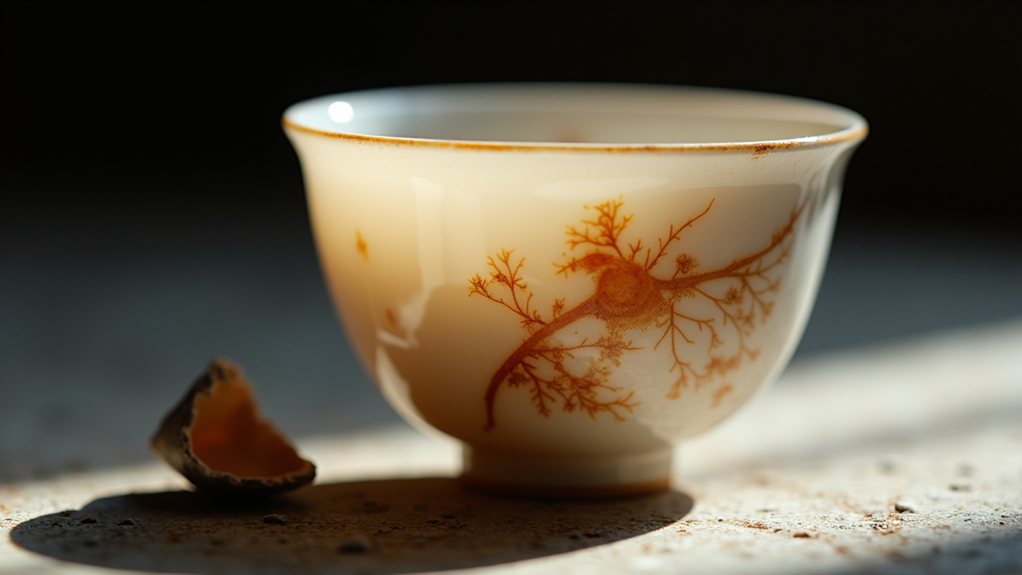
Most people assume porcelain and ceramics are delicate, but that’s actually a misconception rooted in not understanding the science. When clay gets fired at extremely high temperatures, something remarkable happens. The minerals fuse together, creating a dense, hard structure that’s surprisingly tough. Think of it like baking a cake, except instead of something soft and crumbly, you get something closer to stone. Porcelain specifically fires at temperatures between 1,200 and 1,400 degrees Celsius, which transforms it into one of the hardest ceramic materials available. You’d actually struggle to scratch it with a metal key. The resulting material resists moisture, heat, and everyday wear remarkably well. So while ceramics can break if dropped, they’re genuinely built to last through years of regular use. Porcelain ring holders, such as the Enchanted Forest Porcelain Mushroom Ring Holder, showcase how durability and decorative craft can coexist in handmade pieces gold lustre accents and can withstand daily handling.
How Clay Type Determines a Ceramic Gift’s Durability
Not all clay is created equal, and the type used in your ceramic gift matters more than you’d think. Porcelain, for example, is dense and fired at extremely high temperatures, making it surprisingly tough despite its delicate appearance. gold lustre accents can add luxury but should be protected from abrasion to preserve the finish. Stoneware, on the other hand, is thicker and more resistant to chipping, which makes it a favorite for everyday mugs and bowls. Earthenware is the softer option, fired at lower temperatures, so it’s more vulnerable to cracks and chips over time. Think of it like choosing shoes — some are built for hiking, others for dancing. Knowing which clay your handmade gift is made from helps you understand how to care for it properly and sets realistic expectations for its long-term durability.
Why Firing Temperature Makes or Breaks a Handmade Ceramic
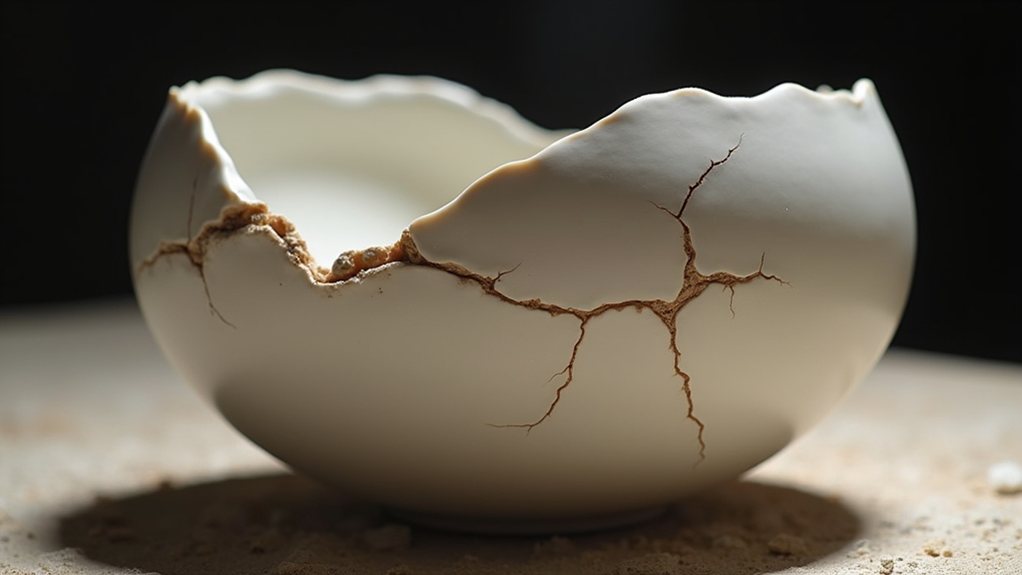
When it comes to how tough your ceramic gift really is, the kiln temperature during firing might be the biggest factor of all. You can think of it like baking a cake — too low a temperature, and you’ve got a soggy mess; too high, and you’ve got a burnt disaster.
Low-fire ceramics, typically heated between 1,800°F and 2,100°F, are more porous and less durable, while high-fire ceramics, reaching up to 2,400°F, go through stronger physical changes that make them considerably tougher and longer-lasting.
Kiln Temperature Explained
Here’s how kiln temperature quietly determines whether your ceramic gift becomes a treasure or a tragedy. Think of a kiln like an oven, except instead of cookies, you’re baking clay at extreme heat. Low-fire ceramics reach around 1,800°F, while high-fire stoneware and porcelain push past 2,300°F. That extra heat isn’t just showing off — it actually fuses the clay particles tighter together, creating a denser, stronger final piece. Higher firing temperatures also reduce how much water the clay absorbs, making your mug or vase less likely to crack over time. A piece fired too low stays porous and weak, almost like hardened mud. So when someone calls handmade ceramics fragile, they’re often forgetting that temperature does most of the heavy lifting.
Low Fire Versus High Fire
Here’s what those differences mean for you practically:
- Low-fire pieces work beautifully as decorative items but aren’t ideal for daily use
- High-fire stoneware handles everyday wear surprisingly well
- Porcelain sits at the top, combining strength with elegance
Strength Through Proper Firing
So how does firing temperature actually determine whether your handmade ceramic lasts decades or shatters after one rough morning? The answer isn’t complicated, but it matters more than most people realize.
When a potter fires clay at the right temperature, the particles fuse together tightly, creating a strong, dense structure. Skip that step or rush it, and you’re left with something that looks beautiful but behaves like a nervous teacup at a dinner party.
Proper firing drives out moisture, strengthens the clay body, and bonds the glaze permanently to the surface. Too low, and the piece stays porous and weak. Too high, and it warps or cracks. That sweet spot isn’t luck — it’s skill, patience, and understanding how heat transforms raw clay into something genuinely durable.
How Glazing Protects Handmade Ceramics From Daily Wear
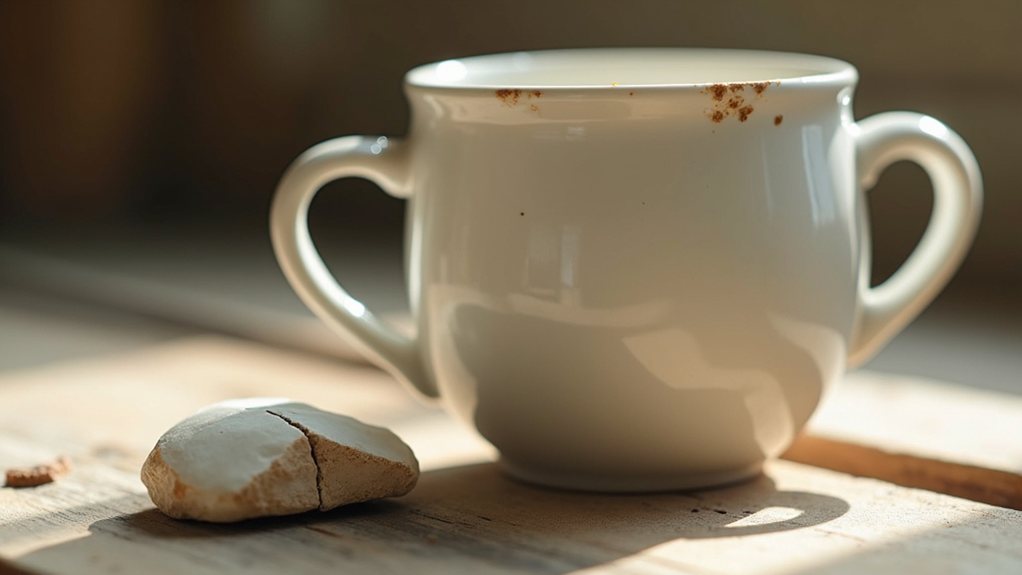
Glazing does a lot more than make your ceramic mug look shiny and polished — it’s actually working hard to protect the piece underneath. Think of glaze as your ceramic’s personal bodyguard. It seals the porous clay surface, creating a tough barrier against everyday threats. Here’s what glazing actually protects against:
- Moisture absorption, which weakens unglazed clay over time
- Scratches and surface scuffs from daily handling and washing
- Staining from coffee, tea, and other liquids that would otherwise seep in
Without glaze, even a beautifully fired piece would absorb spills and eventually crack or discolor. So when you’re admiring that glossy finish on your handmade gift, remember — it’s not just decoration. It’s protection you can actually count on.
Handmade vs. Mass-Produced Ceramics: Which Is More Durable?
Now that you know how much work glaze puts in to protect your ceramics, you might be wondering how handmade pieces actually stack up against the perfectly uniform mugs rolling off a factory line. Here’s the honest truth: mass-produced ceramics often win on consistency, but handmade pieces aren’t the delicate little divas you might think they are. Factory ceramics use standardized materials and controlled firing, which reduces unpredictability. However, skilled potters carefully choose their clay and firing temperatures too, often producing equally tough results. The real difference isn’t always durability — it’s intention. Handmade ceramics carry thoughtful craftsmanship that mass production simply can’t replicate. With proper care, your handmade mug will likely outlast that bargain bin option you grabbed on impulse. Quality craftsmanship genuinely matters.
The Real Reasons Handmade Ceramics Chip, Crack, or Break
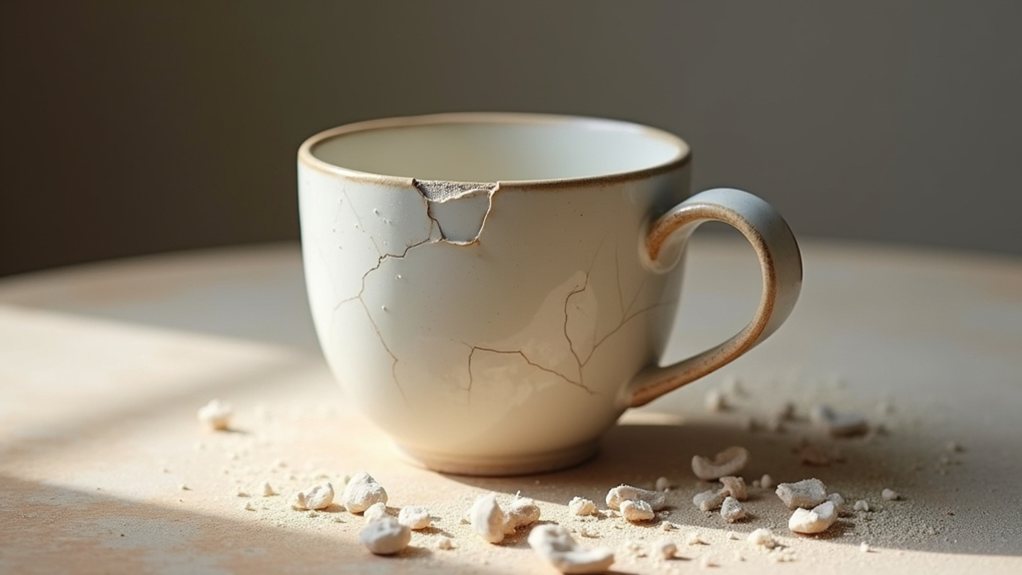
Even the toughest handmade ceramic can meet its match when you expose it to sudden temperature changes, like pouring boiling water into a cold mug, causing thermal shock that leads to cracks. If you’ve ever accidentally knocked a ceramic piece against the sink, you’ve experienced how impact, combined with thin or uneven walls from the handmaking process, can create chips or full-on breaks. And don’t overlook the glaze — when it’s applied unevenly or fired incorrectly, it creates weak spots that make your piece far more vulnerable than it looks.
Thermal Shock Causes Cracks
Thermal shock is one of the sneakiest culprits behind cracked ceramics, and it happens more often than you’d think. When you expose your ceramic piece to sudden temperature changes, the material expands or contracts too quickly, causing stress fractures. It’s basically your mug’s version of a bad surprise.
Watch out for these common thermal shock mistakes:
- Pouring boiling water into a cold ceramic mug straight from the cabinet
- Moving a ceramic dish directly from the freezer into a hot oven
- Rinsing a warm ceramic piece under cold water immediately after use
These situations force your ceramics to handle extreme temperature swings they simply weren’t designed for. Letting your pieces adjust gradually to temperature changes keeps them safer and extends their life significantly.
Impact And Structural Weakness
Beyond temperature mishaps, there’s another set of culprits that’s probably responsible for most of the chips and cracks in your ceramic collection: physical impact and structural weak points. When you drop a ceramic mug or knock it against your sink, the force travels through the material instantly. Porcelain doesn’t flex or absorb that energy like plastic does — it transfers it until something gives way.
Handmade pieces also carry natural variations in thickness and density. A slightly thinner wall or uneven base creates spots where stress concentrates during impact. These aren’t manufacturing flaws — they’re simply characteristics of handcrafted work. That beautiful, one-of-a-kind bowl you treasure has personality built into it, but those same unique qualities mean certain areas need a little extra care from you.
Improper Glazing Creates Fragility
Physical impact isn’t the only hidden enemy of your ceramic pieces — glazing problems can quietly set up a piece for failure before it ever leaves the studio. When glazing goes wrong, your mug or bowl becomes a ticking time bomb of tiny cracks waiting to happen.
Three common glazing mistakes that weaken ceramics include:
- Applying glaze too thinly or unevenly, leaving vulnerable bare spots
- Using incompatible glaze and clay combinations that expand at different rates
- Firing at incorrect temperatures, causing the glaze to crawl or flake
These issues create crazing, which looks like fine surface cracking, or worse, complete structural failure later. You mightn’t notice the damage immediately, but stress builds over time, especially with daily use and temperature changes.
How to Handle and Store Ceramic Gifts Without Damaging Them
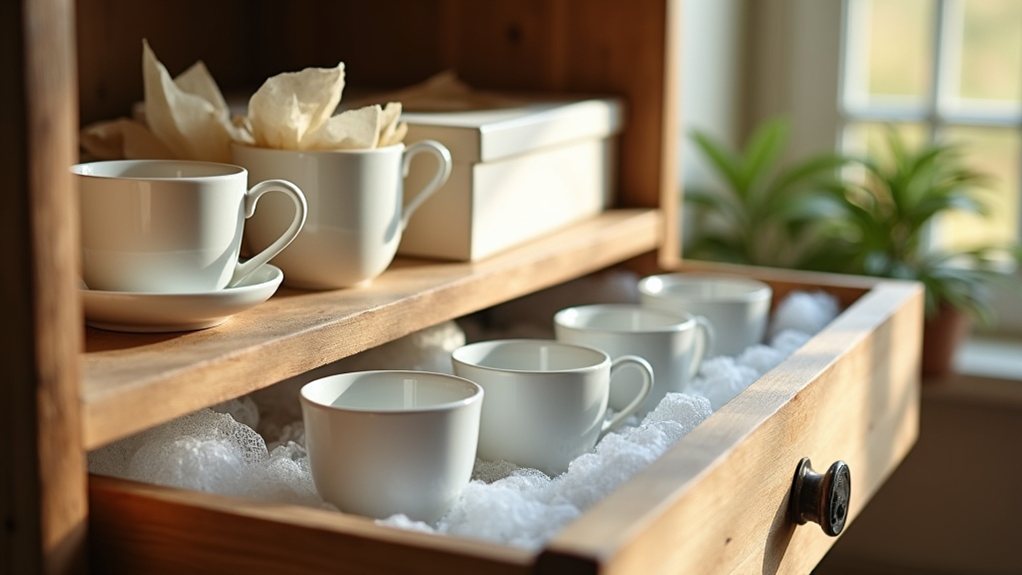
Knowing how to properly handle and store your ceramic gifts can mean the difference between a treasured keepsake and a heartbreaking pile of shards. Always pick up ceramic pieces with both hands, supporting the base rather than grabbing handles or delicate edges. Those pretty handles aren’t built for swinging your mug around like a lasso. When storing ceramics, wrap each piece individually in soft cloth or bubble wrap, keeping them upright whenever possible. Don’t stack heavy pieces directly on top of each other, because pressure causes cracks over time. Store them away from extreme temperature changes, since heat and cold make ceramics expand and contract. A stable environment keeps your pieces safe and beautiful for years to come.
What to Look for When Buying a Durable Handmade Ceramic Gift
Storing your ceramics properly is half the battle, but picking a well-made piece from the start saves you a lot of heartache down the road. When you’re shopping for handmade ceramic gifts, don’t just grab the prettiest one and call it a day. Look closely at the craftsmanship before committing.
Here’s what actually matters:
- Uniform thickness — thin, uneven walls chip and crack far more easily
- Smooth glaze — bubbles or rough patches suggest poor firing technique
- Sturdy base — a wobbly bottom means the piece wasn’t properly finished
Run your fingers along the edges and bottom. If something feels off, trust that instinct. A well-fired ceramic piece feels solid and balanced, not delicate or awkward. Quality craftsmanship genuinely makes all the difference.
Final Thoughts
Handmade ceramics aren’t as fragile as you might think. With proper clay, careful firing, and quality glazing, they’re built to last. You just need to treat them thoughtfully — skip the sudden temperature swings, handle them with care, and store them smartly. Strong, sturdy, and surprisingly solid, a well-made ceramic gift can serve you for decades. So don’t let fear of breakage stop you from choosing something beautifully crafted and genuinely meaningful.