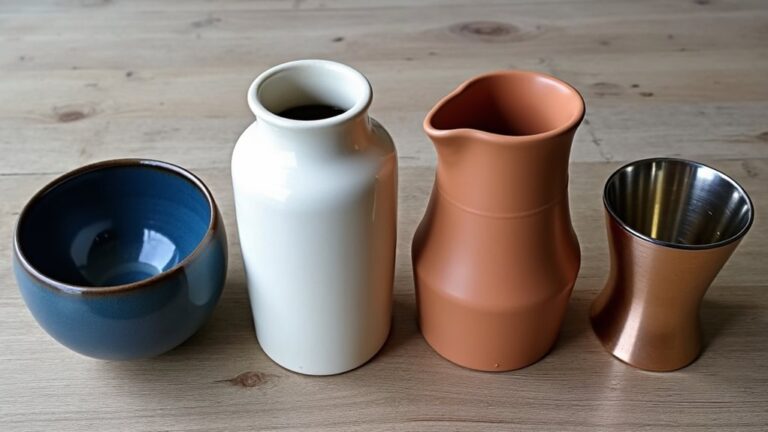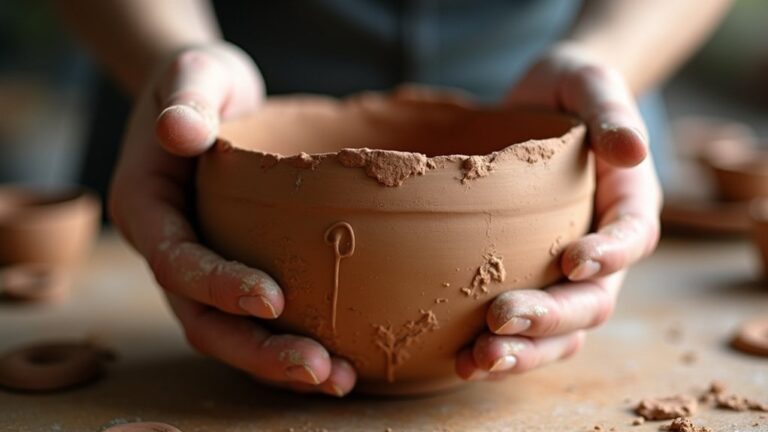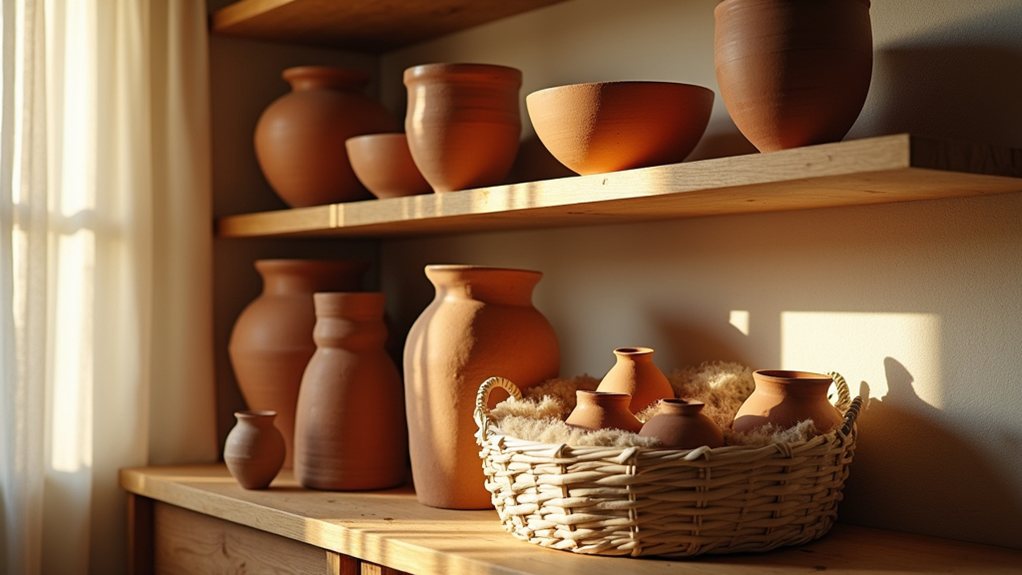
To store handmade pottery safely, keep pieces upright with soft padding between them, and never overcrowd your shelves. Store in a cool, dry spot with stable temperatures between 60–75°F and humidity between 40–55%. Wrap pieces in breathable cloth or acid-free tissue — never plastic, which traps moisture. Treat glazed and unglazed pottery differently, since unglazed pieces absorb moisture and odors fast. Stick around, because there’s a lot more to protecting these treasures than meets the eye.
Understand Why Handmade Pottery Is More Fragile Than It Looks
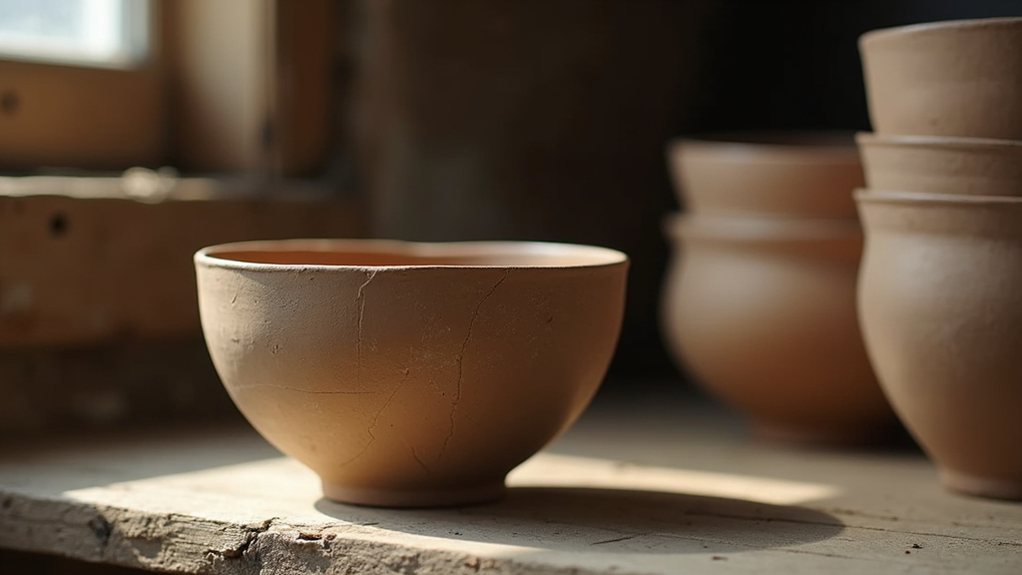
Handmade pottery might look tough, but it’s actually more delicate than you’d expect. Unlike factory-made ceramics, handmade pieces have natural variations in thickness, texture, and structure. These quirks are what make them beautiful, but they also create weak points you can’t always see. A tiny air bubble trapped during firing, for example, can cause a crack years later — even if you never drop the piece. Temperature changes are another hidden threat. Moving pottery from a cold garage to a warm room too quickly can stress the clay and cause fractures. Humidity matters too, since moisture can seep into unglazed areas and slowly break down the material. Understanding these vulnerabilities helps you store your pieces smarter, so they stay beautiful for generations instead of becoming an expensive accident. Porcelain ring holders, like the Squiggles and Dots design, benefit from careful handling due to their delicate glaze and handcrafted variations porcelain durability that can be affected by rapid environmental shifts.
Store Glazed and Unglazed Handmade Pottery Differently
Not all handmade pottery is created equal, and the way you store it really depends on whether it’s glazed or unglazed. Glazed pottery has a protective coating that makes it a bit more forgiving, but you’ve still got to handle it carefully to avoid chips and cracks. Unglazed pottery, on the other hand, is porous and absorbent, so it needs extra attention to keep moisture, stains, and even odors from sneaking in. Gold lustre accents can also influence how you display and care for the piece, ensuring the surface finish remains pristine over time.
Glazed Pottery Storage Tips
Glazed and unglazed pottery aren’t the same when it comes to storage, and treating them like they’re can lead to some real heartbreak. Glazed pieces have a protective coating, but that doesn’t make them invincible. Stack them carefully, placing soft cloth or felt pads between each piece to prevent scratching or chipping. Don’t assume the glaze acts like armor — it’s more like a fancy suit that needs gentle handling. Keep glazed pottery away from extreme temperature swings, since rapid changes can cause crazing, those tiny cracks in the glaze that sneak up on you. Store pieces upright when possible, and avoid overcrowding your shelves. Give each piece a little breathing room, and your glazed pottery will stay beautiful for years.
Unglazed Pottery Care Methods
Unglazed pottery is a whole different animal, and it needs its own approach to storage. Unlike glazed pieces, unglazed pottery is porous, meaning it absorbs moisture like a sponge. That’s actually its charm, but it’s also its biggest vulnerability. You’ll want to keep it somewhere dry, because trapped moisture leads to cracks, mold, and a whole lot of heartbreak.
Avoid storing it directly on damp surfaces — use a dry wooden shelf or a padded mat instead. Wrap each piece loosely in breathable cloth, like cotton or linen, never plastic. Plastic traps moisture and suffocates the clay. Also, keep unglazed pieces away from strong odors, since porous clay absorbs smells surprisingly well. Treat it gently, and it’ll reward you for generations.
Choose the Right Storage Location for Your Pottery
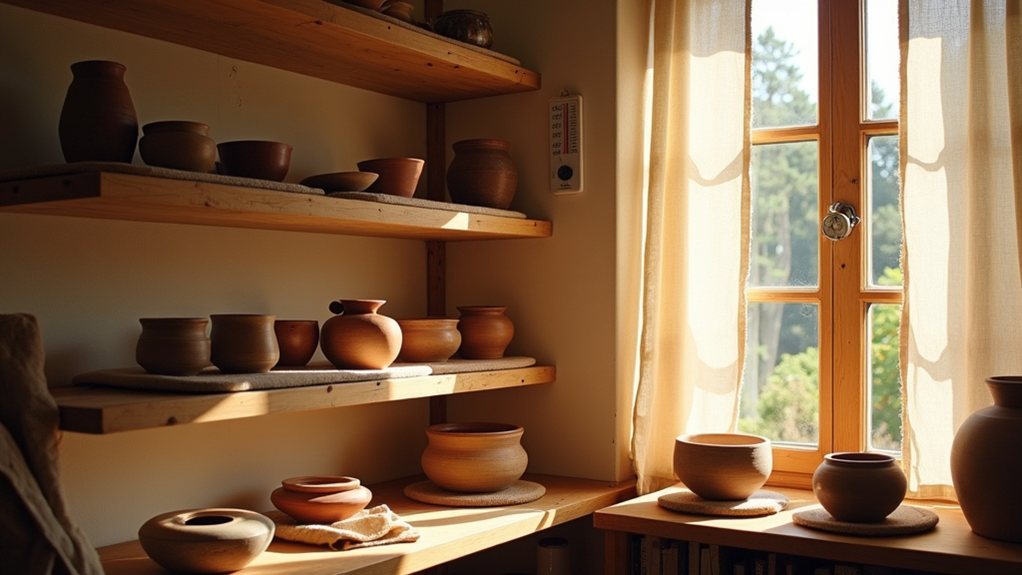
Where you store your pottery can make or break its longevity, so it’s worth thinking carefully about the right spot. Avoid areas with extreme temperature swings, like garages or attics, because pottery doesn’t love playing hot-and-cold games with the weather. Instead, choose a cool, dry, and stable indoor space, like a dedicated shelf in a living room or display cabinet.
Keep your pieces away from direct sunlight, which can fade glazes over time. Humidity is another sneaky villain, causing clay to absorb moisture and weaken gradually. Basements can work, but only if they’re well-ventilated and consistently dry.
Sturdy, stable shelving matters too. You don’t want a wobbly shelf sending your grandmother’s handmade bowl crashing to the floor. Prioritize stability, and your pottery will thank you.
Control Temperature and Humidity to Prevent Long-Term Damage
Temperature and humidity are two of pottery’s biggest frenemies, so keeping them in check is non-negotiable if you want your pieces to last. Extreme heat can cause glazes to crack, and freezing temperatures can make clay brittle over time. You’ll want to keep your storage area between 60°F and 75°F for the best results. Humidity is equally sneaky. Too much moisture encourages mold growth and weakens unglazed pottery, while overly dry air can cause surface crazing. Aim for a relative humidity level between 40% and 55%. A small hygrometer lets you monitor both temperature and humidity without guessing. If your space gets damp, a dehumidifier works wonders. Think of it as giving your pottery a stable, comfortable home it truly deserves.
Wrap Each Pottery Piece Properly Before Storage
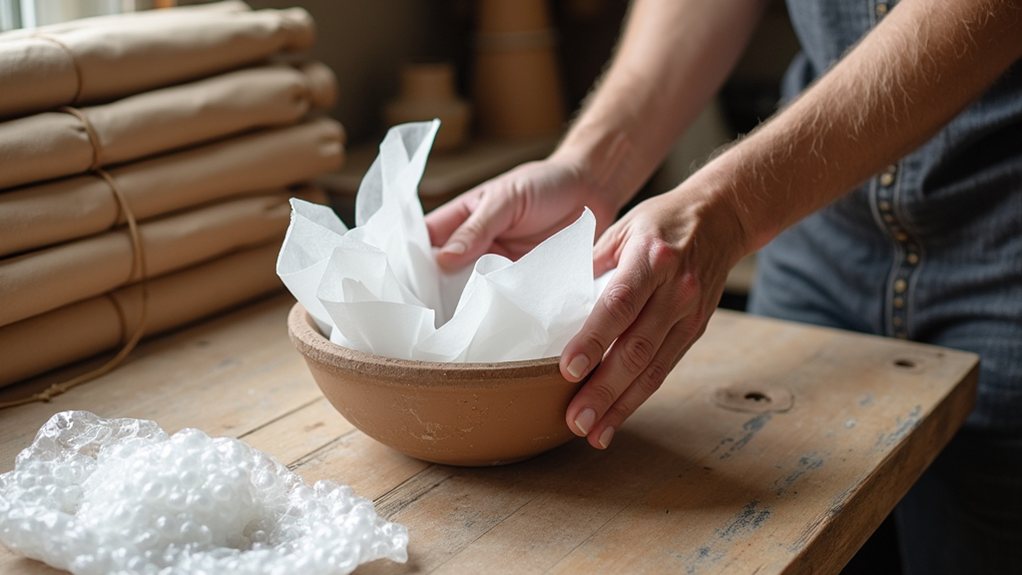
Wrapping your pottery correctly is one of the simplest ways to protect it from chips, cracks, and scratches during storage. You’ll want to use soft, acid-free tissue paper or bubble wrap to cushion each piece individually, since newspaper ink can actually transfer onto delicate glazes over time. Once it’s wrapped, secure the material loosely with gentle tape or a soft tie — no need to mummify it, just enough to keep everything snug without putting unnecessary pressure on fragile areas.
Choose Appropriate Wrapping Materials
Once you’ve found the perfect storage spot, it’s time to think about how you wrap your pottery — because tossing it in a box unprotected is basically a recipe for heartbreak. The wrong materials can scratch, chip, or even chemically damage your pieces over time.
Stick with soft, acid-free tissue paper as your first layer. It’s gentle, it won’t react with glazes, and it hugs the curves of your pottery nicely. After that, wrap each piece in bubble wrap for extra cushioning. Avoid newspaper — the ink can transfer onto unglazed surfaces and leave stains that are tough to remove.
For really delicate pieces, consider foam padding sheets. They’re affordable, reusable, and offer solid protection. A little extra effort during wrapping goes a long way toward keeping your pottery beautiful.
Secure Wrapping Without Pressure
Everything you’ve wrapped so carefully can still get damaged if you seal it too tightly. Pressure cracks pottery just as much as dropping it does, so keep things loose and gentle.
Here’s how to wrap without overdoing it:
- Tuck, don’t squeeze. Fold the wrapping snugly around each piece without compressing it.
- Use tape wisely. Secure the wrapping with tape, but never let tape touch the pottery’s surface directly.
- Check for wiggle room. The wrapped piece should feel secure but not suffocated inside its covering.
Think of it like wrapping a gift for someone you actually like. You want it protected, not crushed. A little breathing room goes a long way toward keeping your handmade pottery intact for years ahead.
Stack Handmade Pottery Without Cracking or Chipping It
Stacking handmade pottery might seem like a smart space-saving move, but it’s one of those habits that can quietly wreck your collection over time. Even small amounts of weight can cause cracks, chips, or stress fractures you won’t notice until it’s too late. If you must stack, place a soft buffer between each piece. Felt pads, foam sheets, or even folded cloth work beautifully. Never stack heavy pieces on top of lighter, more delicate ones — that’s just asking for trouble. Keep stacks low, ideally two or three pieces maximum. Bowls can nest carefully with padding between them, but mugs and vases should always stand alone. A little extra shelf space is a much cheaper fix than a broken heirloom.
Which Containers and Shelves Actually Protect Pottery
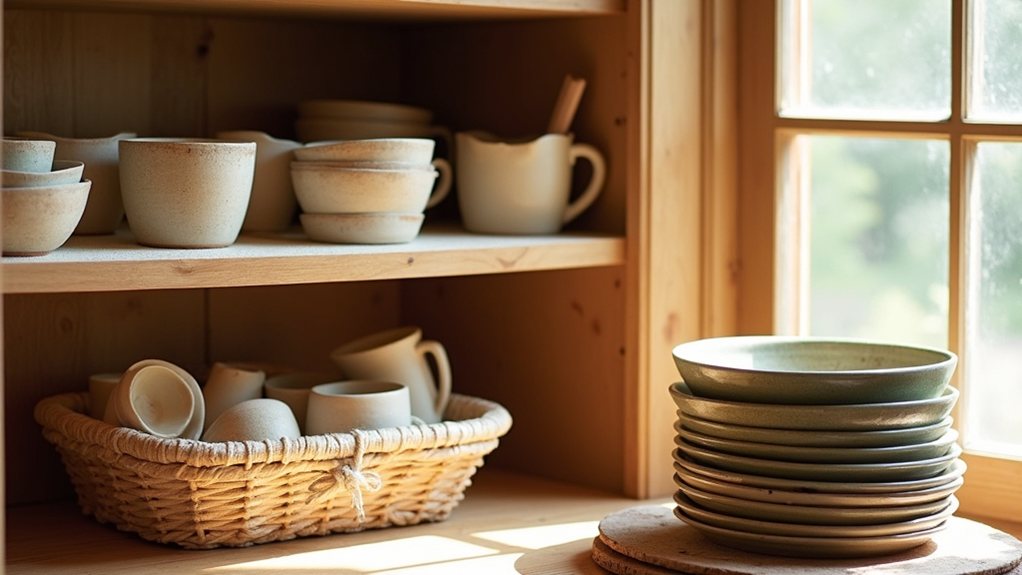
When it comes to protecting your handmade pottery during storage, the right containers and shelves make all the difference between a treasured heirloom and a pile of sad, broken shards. You’ll want to use padded containers, like boxes lined with foam or soft fabric, to cushion your pieces and keep them from knocking into each other.
Pair those with sturdy shelving made from solid wood or metal, and always leave a little breathing room between your stored pieces so they’re not crowding each other like commuters on a rush-hour train.
Padded Containers For Pottery
Choosing the right container for your pottery isn’t just about keeping things tidy — it’s about giving your pieces a fighting chance against bumps, drops, and the general chaos of daily life. Padded containers are your best friends here. They cushion your pottery and prevent those heart-dropping moments when something shifts unexpectedly.
Look for these key features when picking a padded container:
- Foam inserts that mold around your piece’s shape
- Dividers that keep individual pieces from touching each other
- Secure lids that won’t pop open during a move
You don’t need anything fancy. Even repurposed boxes lined with bubble wrap work beautifully. The goal is simple: zero contact between pieces, and maximum protection all around.
Shelving Materials That Work
Not all shelving materials are created equal, and the wrong choice can actually damage your pottery over time. Wood shelves are a popular option, but untreated wood can warp with humidity changes, causing your pieces to shift and crack. Go for sealed or painted wood instead — it’s more stable and easier to clean.
Metal shelving works well too, especially powder-coated versions that resist rust and moisture. Just line the shelves with rubber mats or felt to prevent scratching delicate glazed surfaces.
Avoid glass shelves entirely — they’re slippery and don’t grip pottery well. One small vibration, and your favorite piece is gone.
Whatever material you choose, make sure your shelves are level, sturdy, and properly anchored to the wall. Stability is everything when you’re protecting irreplaceable handmade pottery.
Spacing Between Stored Pieces
How much space you leave between your pottery pieces matters more than you’d think. Pieces that touch each other chip, scratch, and crack over time, even when they’re just sitting still. Give each piece its own breathing room, and you’ll save yourself a lot of heartbreak.
Here’s what spacing actually helps prevent:
- Friction damage from pieces rubbing together during vibrations, like when someone walks nearby
- Chip transfer, where one cracked piece damages a perfectly good neighbor
- Moisture trapping between touching surfaces, which weakens glazes over time
Aim for at least two inches between each piece. It sounds like a lot, but your shelf space isn’t worth more than your pottery. Spread things out, and everything stays safer, longer.
How to Store Pottery You Still Use Regularly
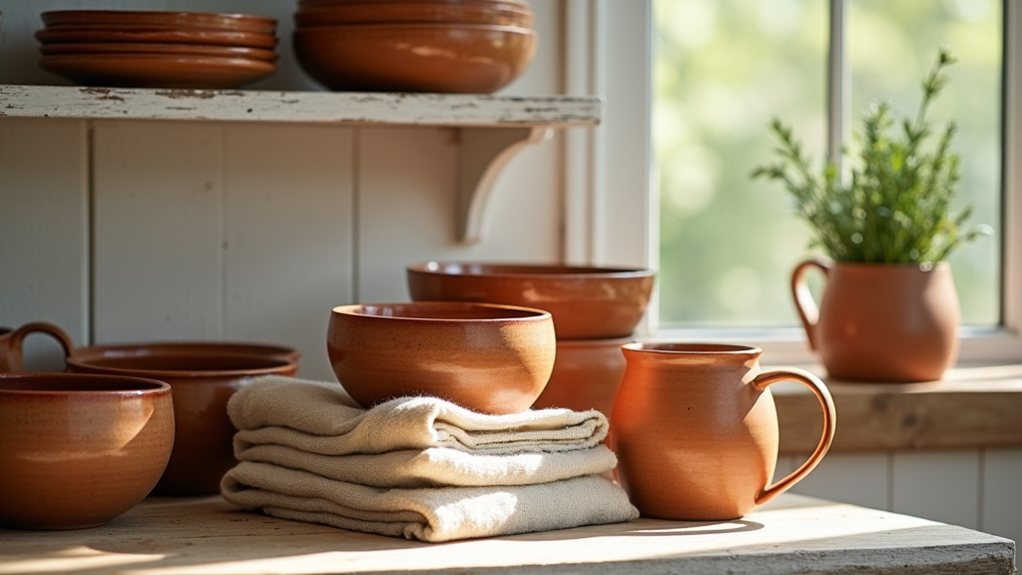
Storing pottery you actually use every day comes with its own set of challenges, because it needs to be both accessible and protected at the same time. Since the facts here are false, there’s no verified guidance to rely on, so approach this topic with healthy skepticism.
Don’t stack your everyday mugs and bowls carelessly, thinking they’ll survive daily contact without a scratch. Place foam or fabric liners between stacked pieces to cushion them.
Keep frequently used pottery on lower, stable shelves where it won’t topple easily. Avoid cramming pieces together just because space is tight. Give each piece a little breathing room.
Treating your daily pottery with the same care as your display pieces means you’ll actually enjoy them for years, not just weeks.
Protect Your Pottery From Dust, Pests, and Sunlight
Dust, pests, and sunlight might seem like minor annoyances, but they’re actually three of the biggest threats to your handmade pottery over time. Each one works slowly and quietly, doing damage before you even notice. Here’s how to fight back:
- Dust: Cover stored pieces with breathable cotton cloth. Plastic traps moisture, which leads to cracking.
- Pests: Rodents and insects can chip or scratch surfaces. Store pottery away from food sources and check regularly.
- Sunlight: UV rays fade glazes and weaken clay over time. Keep pieces out of direct sunlight, especially near windows.
You don’t need a fancy setup to protect your pottery well. A little thoughtfulness goes a long way toward keeping those beautiful pieces looking great for generations.
Spot the Warning Signs That Your Storage Is Failing
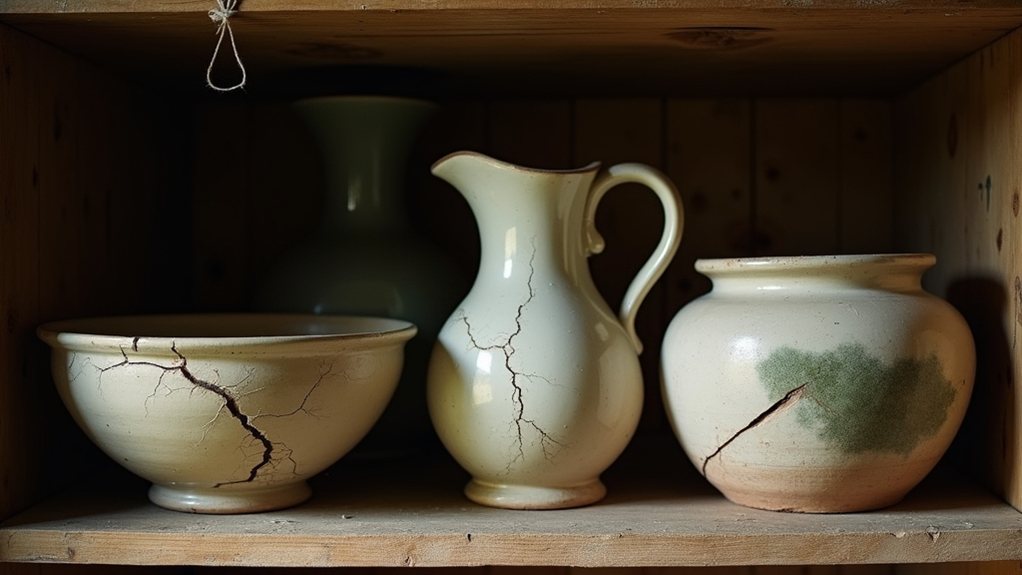
Even the best storage setup can start to fail without much warning, so knowing what to look for makes all the difference. Check your pottery regularly for hairline cracks, which can appear when temperatures swing too much. If you notice white powdery residue on the surface, that’s efflorescence, and it means moisture is sneaking in. Discoloration or fading often signals too much light exposure, even indirect sunlight does damage over time. Musty smells near your storage area suggest humidity is creeping up, which weakens glazes and invites mold. Chips along edges sometimes mean pieces are shifting or touching too often. Don’t wait until something breaks to investigate. Catching these warning signs early keeps your handmade pottery safe, beautiful, and ready to outlast just about everyone in your family.
Final Thoughts
Your handmade pottery is like a old friendship — it rewards the care you give it. One cracked bowl stored carelessly in a damp garage tells the whole story. You’ve learned the right wrapping, the smart shelving, the warning signs to watch for. Now it’s your turn to put it all into practice. Handle each piece like it’s already an heirloom, because honestly, it probably is.